Shoulder Pain & Rehabilitation
Shoulder Pain & Dysfunction
Reaching overhead, sleeping on your side, lifting your kids: none of that should hurt. We find what's actually driving your shoulder pain: rotator cuff, joint, or movement pattern: and build a plan that gets your shoulder strong and pain-free again.
Start here
Get the Right Diagnosis
Shoulder pain rarely has one cause. Our initial assessment pinpoints whether it's the cuff, the joint, the neck, or how you move: then builds your rehab around it.
Book AssessmentUnderstanding the Condition
What Causes Shoulder Pain & Dysfunction
Rotator Cuff Strain or Tear
The rotator cuff can become painful following changes in activity, repetitive loading, injury, or age-related tendon changes. Symptoms may include pain with lifting or reaching, weakness, or discomfort when lying on the affected side.
Shoulder Impingement
Pain during reaching or overhead movement can involve the rotator cuff and surrounding structures. Changes in load, strength, movement, and activity can all contribute, which is why treatment is based on your individual assessment rather than one single cause.
Frozen Shoulder (Adhesive Capsulitis)
Frozen shoulder causes progressive pain and significant restriction in shoulder movement. It can develop gradually without a clear cause or occur following injury, surgery, or periods of reduced movement. Rehabilitation is adapted according to the stage and irritability of the condition.
AC Joint Pain & Injury
Pain at the top of the shoulder from falls, heavy pressing, or wear. Often localised and worse with overhead or across-body movements.
Post-Surgical Rehabilitation
Following procedures such as rotator cuff repair, shoulder stabilisation, or other shoulder surgery, structured rehabilitation helps progressively restore movement, strength, and function while respecting your surgeon's protocol and healing timelines.
Neck-Referred Shoulder Pain
Sometimes the shoulder isn't the problem. Irritated nerves or joints in the neck can refer pain into the shoulder: a full assessment finds the true source.
How we treat it
The KINETIKA Approach
We assess rotator cuff strength, joint range and scapular control, and screen the neck, because shoulder pain often refers from above.
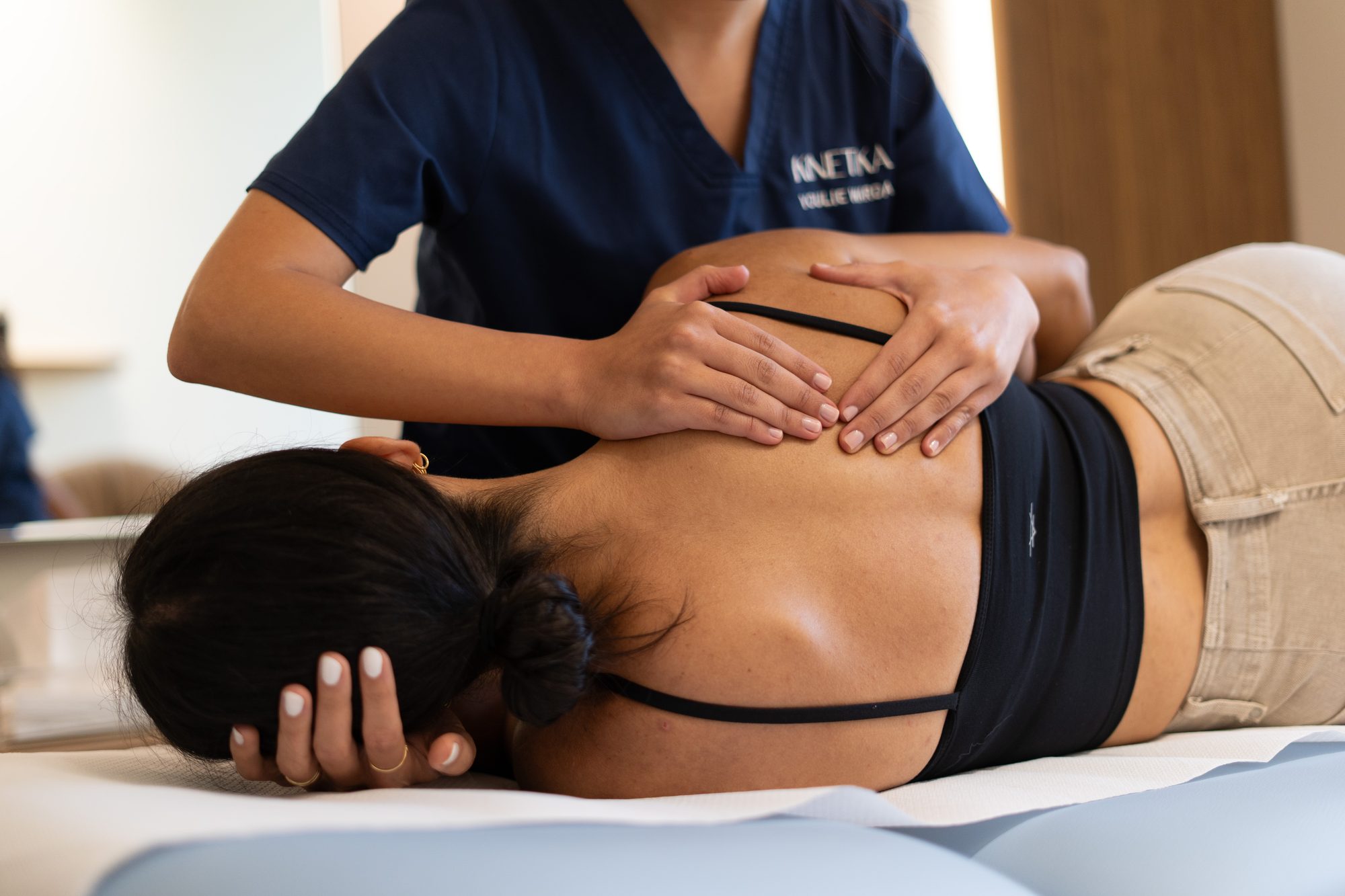
Hands-on treatment to restore shoulder range, reduce impingement, and free the shoulder blade to move normally again.
Progressive loading for the cuff and the muscles that control the shoulder blade, rebuilding overhead strength safely.
We stage your return to overhead work, sport and side-lying sleep, with post-surgical protocols where they apply.

Take the next step
Book Your Initial Assessment
Tell us what's going on with your shoulder. We'll find what's actually driving the pain and build a plan that gets you reaching, lifting, and sleeping comfortably again.

Common questions
Frequently Asked Questions
Side-sleeping compresses the cuff tendons and bursa, which can flare up existing irritation. It’s one of the earliest signs of rotator cuff or bursal issues. A proper assessment will tell us what’s being aggravated: and how to fix it.
Not every shoulder pain is a tear. Weakness lifting, pain at night, and trouble reaching overhead are signals: but we can usually identify a tear clinically, without an MRI. If imaging is needed, we’ll refer you appropriately.
Frozen shoulder moves in stages and typically takes 12 to 18 months to fully resolve on its own. With targeted physiotherapy: joint mobilisation, staged loading, and pain management: we can significantly shorten that timeline and reduce pain along the way.
Medically reviewed by the Kinetika Clinical Team · Last reviewed 26 September 2026