
Vestibular Rehabilitation · Dubai
KINETIKA is one of the few Dubai clinics with specialist vestibular diagnostic equipment: videonystagmoscopy, video head-impulse testing, and clinical balance tools that identify exactly which part of your vestibular system is involved, so treatment is targeted from session one.
Most dizziness patients we see have already had an MRI and blood work, but nobody has tested their vestibular system. Our diagnostic equipment identifies the cause so treatment works from the start.
Book AssessmentSame-week availability · No referral needed
Sound familiar?
You’ve tried to push through it, wait it out, or explain it away. But it keeps coming back, and it’s changing how you live.
You roll over in bed and the world tilts. It passes, but it keeps coming back.
You’ve started bracing yourself on furniture, walls, handrails, even when no one’s looking.
Head checks feel dangerous. You’ve started avoiding highways, roundabouts, or driving at all.
MRI clear. Blood work fine. “Everything looks normal”, but you still feel terrible.
You’ve been told it’s stress, or it’ll pass. Months later, nothing has changed.
The tablets take the edge off, but they don’t fix anything. And they make you foggy.
Why it hasn’t resolved
MRIs and blood work are important. They rule out serious conditions. But they don’t test how your inner ear, balance reflexes, or gaze-stability systems are actually functioning. That requires specialist functional testing.
| Standard investigation | KINETIKA vestibular workup | |
|---|---|---|
| What it tests | Brain structure, blood markers | Inner ear function, balance reflexes, gaze stability |
| Equipment | MRI, blood panel | VNS, vHIT, skull vibration, optokinetic |
| Identifies the cause? | Rules out serious conditions | Pinpoints which vestibular system is involved |
| Leads to targeted treatment? | Often not | Yes. Treatment is matched to diagnosis |
| Typical experience | “Everything looks normal” | “Here’s exactly what’s happening and what we do about it” |
How we treat it
Every case starts with a proper diagnosis. From there, treatment is matched to the mechanism, not a generic protocol.
Videonystagmoscopy, head-impulse test, and clinical balance testing identify which vestibular system is involved before we start treatment.
For BPPV and cervicogenic causes: Epley and Semont manoeuvres and upper-cervical manual therapy where indicated.
Gaze-stability, habituation, and balance exercises dosed to your symptom threshold and progressed deliberately.
Falls-prevention strategies, return-to-driving guidance, and return-to-sport protocols for those who need them.
The diagnostic suite
Very few clinics in Dubai have real vestibular diagnostic equipment. Most rely on clinical observation alone, which misses the subtleties that determine whether your dizziness is peripheral, central, or cervicogenic, and which specific canal or nerve is involved.
KINETIKA’s diagnostic suite allows precise identification of the affected vestibular system. That means your treatment plan is built on data, not assumptions, and we can measure progress objectively at every session.
Infrared video goggles observe eye movements in real time to identify peripheral vs central causes of dizziness.
Evaluates how well your vestibulo-ocular reflex is working: the reflex that keeps your eyes steady when your head moves.
Gentle vibration behind the ear detects asymmetry between left and right inner ear balance organs.
Moving visual patterns retrain your brain’s response to motion and reduce symptoms of visual vertigo.
Conditions we treat
These are the conditions we see most often. Each responds to a different approach, which is why diagnosis matters before treatment begins.
Tiny crystals in the inner ear. Usually resolved in 1-3 sessions with specific repositioning manoeuvres.
Inflammation of the vestibular nerve. Targeted rehabilitation restores balance and gaze stability over weeks.
Persistent dizziness and imbalance after head injury. Specific cervical, vestibular and oculomotor protocols.
Persistent postural-perceptual dizziness with a strong evidence base for graded vestibular rehabilitation.
One or both inner-ear balance systems underperforming. Rehab trains compensation and gaze stability.
Falls-prevention focus combining targeted balance, strength, and confidence training for older adults.
Inside the clinic
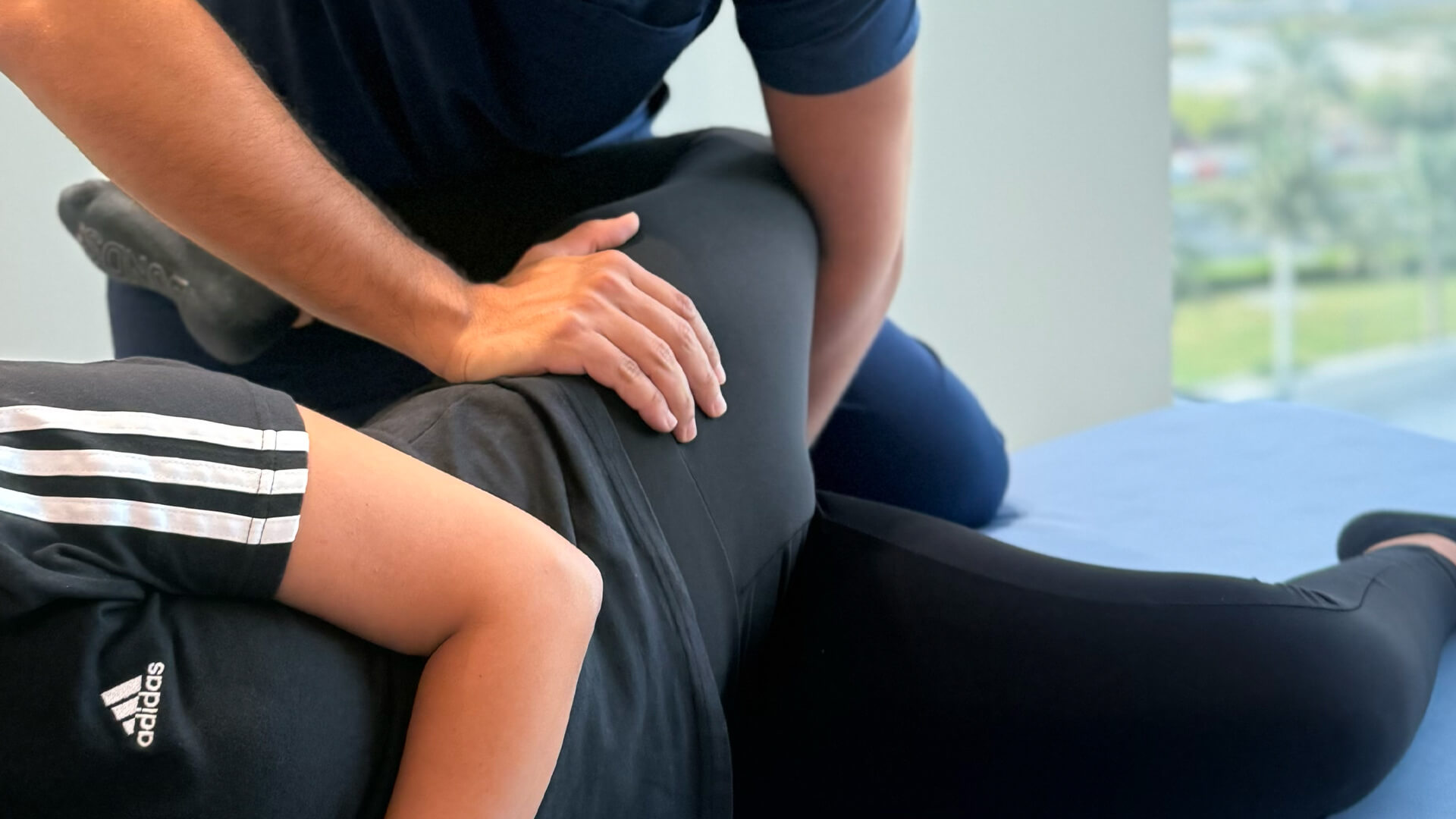
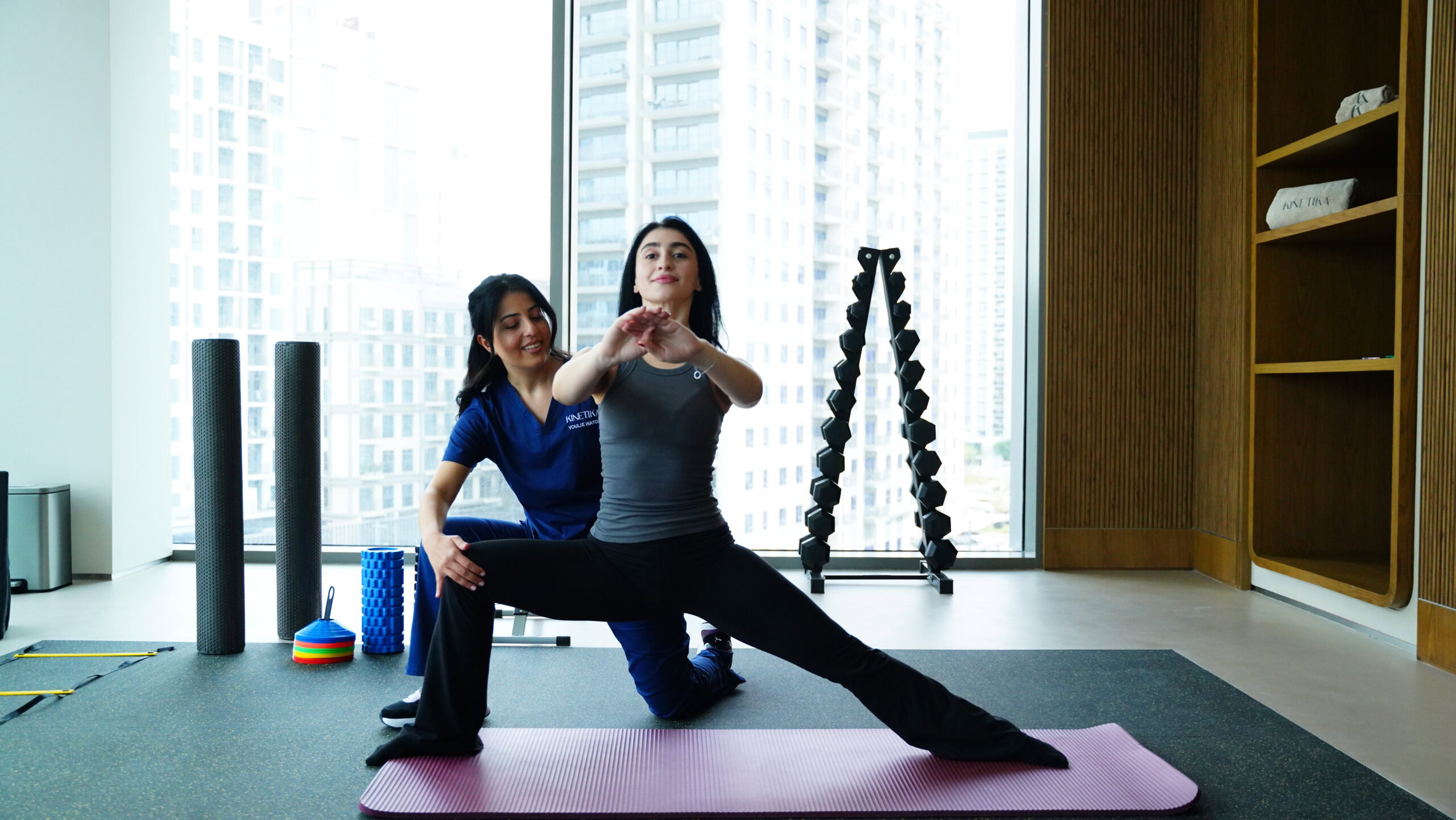
Real photos from our Dubai Hills clinic: the space, the equipment, and the care you’ll receive.

Your specialist
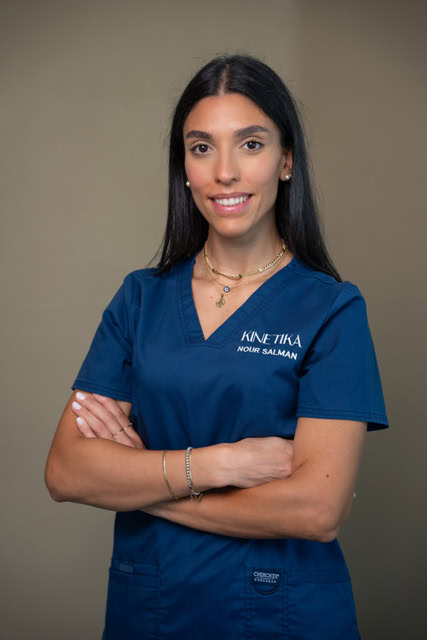
Nour brings a Cleveland Clinic rehabilitation background and over seven years of clinical experience to KINETIKA’s vestibular programme. With specialist training in vestibular diagnostics, she uses videonystagmoscopy, vHIT, and clinical balance testing to identify the root cause of dizziness, then builds targeted treatment plans that get patients back to confident, independent movement.
Why KINETIKA
What makes KINETIKA different from other clinics, and why patients stay with us.
Every plan starts with a detailed, research-backed assessment to find the root cause of your pain, not a one-size-fits-all protocol.
Every physiotherapist at KINETIKA is DHA-licensed and senior level, with 7-8+ years of specialist experience.
Skilled manual therapy combined with advanced rehab technology: shockwave, Tecar, laser, pressure-plate analysis and a fully equipped rehab gym.
Patients consistently rate us five stars on Google, for outcomes, honesty, and how we treat people.
We coordinate with your doctor, dentist or surgeon when needed, and our team speaks English, Arabic and French.
Common questions
BPPV (benign paroxysmal positional vertigo) is caused by tiny calcium crystals dislodging inside the inner ear. It’s the most common cause of vertigo and usually resolves in 1-3 sessions using specific repositioning manoeuvres such as the Epley or Semont technique. We confirm which canal is affected using videonystagmoscopy before treatment begins.
Brief symptom provocation is a normal and expected part of vestibular rehabilitation. It’s how the brain learns to recalibrate. Exercises are carefully dosed to stay within a manageable threshold, and symptoms typically settle within minutes of each session. Over time, your tolerance increases and baseline dizziness decreases.
No. You can book directly with us. No GP or ENT referral is required. If you have existing imaging or reports from other specialists, bring them along and we’ll incorporate the findings into your assessment.
It depends on the diagnosis. BPPV typically resolves in 1-3 sessions. More complex conditions like vestibular neuritis, PPPD, or post-concussion dizziness usually require 6-12 weeks of structured rehabilitation. We’ll give you a clear timeline after your first assessment.
Bring any imaging (MRI, CT reports), a list of current medications, and a description of your symptoms: when they started, what triggers them, and how they affect your daily life. This helps us build the most accurate picture from the start.
Take the next step
Book a vestibular assessment with our specialist physiotherapist. We’ll run the diagnostics, identify the cause, and start targeted treatment, usually in the same session.
TAKE THE FREE SELF CHECKBook an Assessment →Dubai Hills · +971 50 800 3206 · Mon-Sun 09:00-17:00