Knee Pain & Joint Care
Knee Pain & Joint Dysfunction
Stairs, squats, running, or just getting out of a chair shouldn't hurt. We find what's actually loading your knee wrong, joint, tendon, cartilage, or movement pattern, and build a plan that gets you back to full strength.
Start here
Get the Right Diagnosis
Knee pain has many drivers, the joint itself, the hip, the ankle, or how you load them. Our initial assessment finds the real cause and builds your rehab around it.
Book AssessmentUnderstanding the Condition
What Causes Knee Pain & Joint Issues
Patellofemoral Pain Syndrome
Pain around or behind the kneecap, often from tracking issues, weak glutes, or overload during running, stairs, or squats.
Meniscus & Cartilage Injury
Twisting injuries or gradual wear can damage the meniscus, causing catching, locking, or swelling during activity.
Ligament Sprains (ACL, MCL)
Sporting impacts or sudden direction changes can stretch or tear knee ligaments, leaving the joint feeling unstable.
Tendinopathy (Patellar, Quad)
Jumper’s knee and quad tendon pain from repetitive loading, common in runners, jumpers, and anyone ramping up too fast.
Osteoarthritis & Joint Wear
Age-related changes or previous injury can leave the knee stiff, achy, and reactive. Targeted loading reduces pain and preserves function.
Hip & Ankle Mechanics
Weak hips or stiff ankles dump extra stress on the knee. Fixing the joints above and below is often the key to resolving knee pain.
How we treat it
The KINETIKA Approach
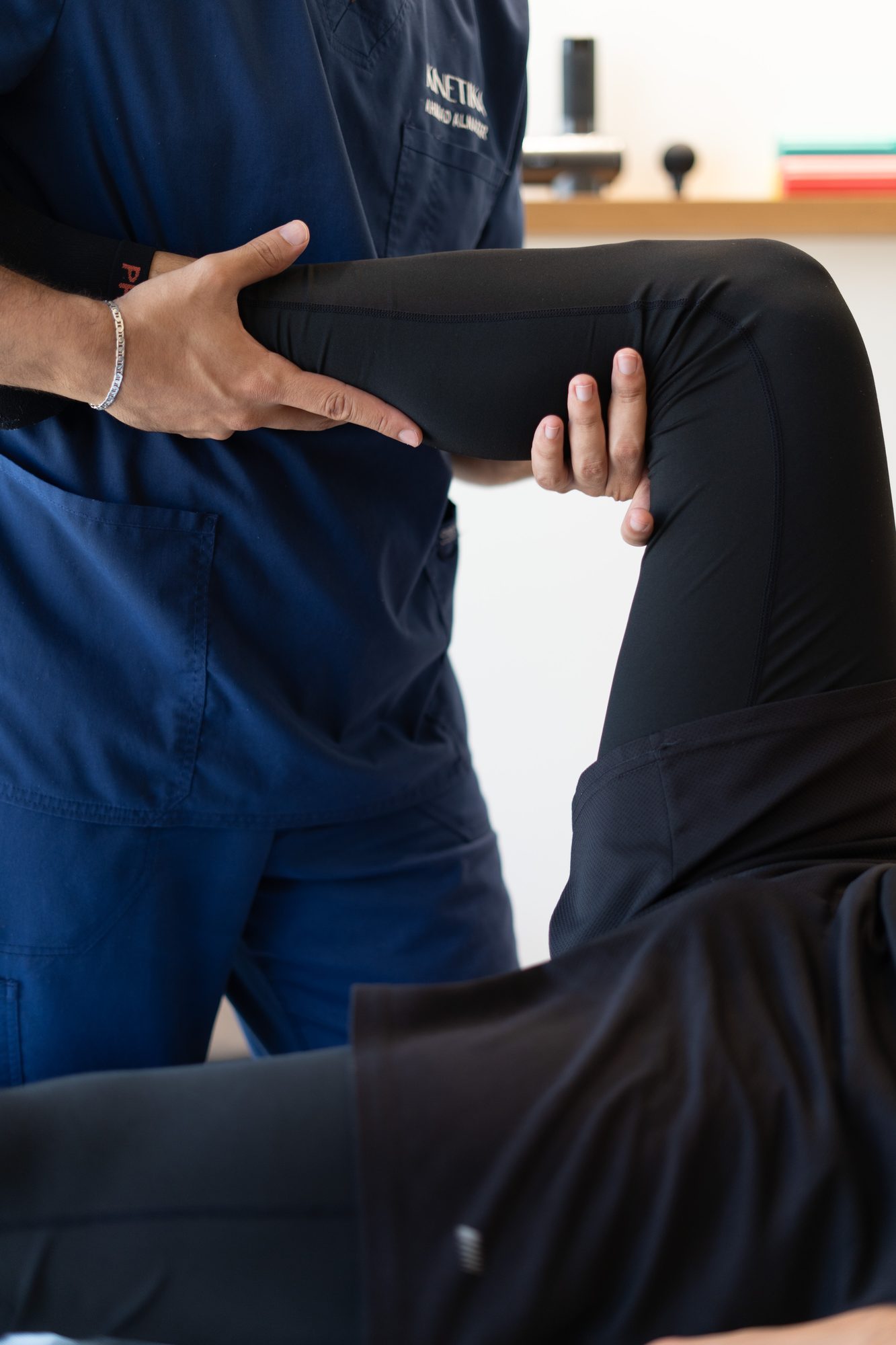
We assess your movement, posture, strength, and pain patterns. No two backs are the same, your plan won't be either.
Manual therapy, joint mobilisation, and targeted soft tissue work to reduce pain fast.
Progressive exercise rehab that rebuilds the strength and movement patterns that pain disrupted.
Understanding your pain changes outcomes. We give you the tools to stay well long-term.
Take the next step
Book Your Initial Assessment
Tell us what's happening with your knee. We'll find the driver and build a plan that gets you back to stairs, sport, and squats without pain.
No referral · No imaging needed · Same-week appointments
Common questions
Frequently Asked Questions
Usually not. A thorough clinical assessment can identify most knee issues. If imaging is needed, we’ll refer you to the right specialist, but starting rehab often helps regardless.
In most cases, yes, with the right modifications. Movement is usually part of the solution, not the problem. We’ll show you what to load and what to back off from.
Acute flare-ups often settle in 2-4 weeks. Longer-standing issues like tendinopathy or OA typically need 8-12 weeks of progressive loading to meaningfully change how the knee feels.