Sports Injuries & Performance

When Training Bites Back

Whether you're chasing a marathon PB, stepping onto the pitch, or grinding through a strength block , pain, niggles, and setbacks interrupt the work you've already put in. We help athletes and active people diagnose what's really going on, treat it properly, and get back to training without losing what you've built.

Runners' KneeHamstring StrainsACL / MeniscusShoulder ImpingementAnkle SprainsTendinopathy

Start here

Get Back to Training

An injury is information. Our assessment pinpoints the real cause , biomechanics, load, technique, or tissue , and maps a return-to-sport plan that holds up under training volume.

Book Your Initial AssessmentWhatsApp Us

Understanding the Injury

What's Actually Happening Under the Surface

01

Overuse & Load Error

Training load jumped faster than your tissues adapted , the most common driver of running, cycling, and gym injuries.

02

Acute Impact & Contact

Tackles, collisions, twisted knees, rolled ankles , field and court sports bring sudden tissue injury that needs rapid, correct management.

03

Biomechanical Faults

A small hip weakness, poor foot strike, or asymmetrical squat pattern quietly loads the wrong tissue thousands of times per session.

04

Tendinopathy

Achilles, patellar, rotator cuff , tendons grumble under repetitive load and need a specific progressive loading programme to heal.

05

Post-Op & Return to Sport

ACL reconstructions, shoulder repairs, meniscus surgeries , structured rehab is what separates a good outcome from a second injury.

06

Recurring Niggles

The same tight hamstring, the same calf pull, the same shoulder twinge every block , recurrence means the underlying cause was never addressed.

How we treat it

Our Return-to-Sport Process

1
Full Movement & Load Assessment

We screen movement quality, strength asymmetries, sport-specific patterns, and training history , not just the painful area.

2
Calm It Down

Manual therapy, shockwave where indicated, and modified loading to settle symptoms quickly without stopping training entirely.

3
Build It Back Stronger

Progressive loading to restore strength, power, and tissue capacity , benchmarked against your sport's demands.

4
Return-to-Sport Testing

Objective criteria before you go full intensity , hop tests, strength ratios, sport-specific drills. No guessing.
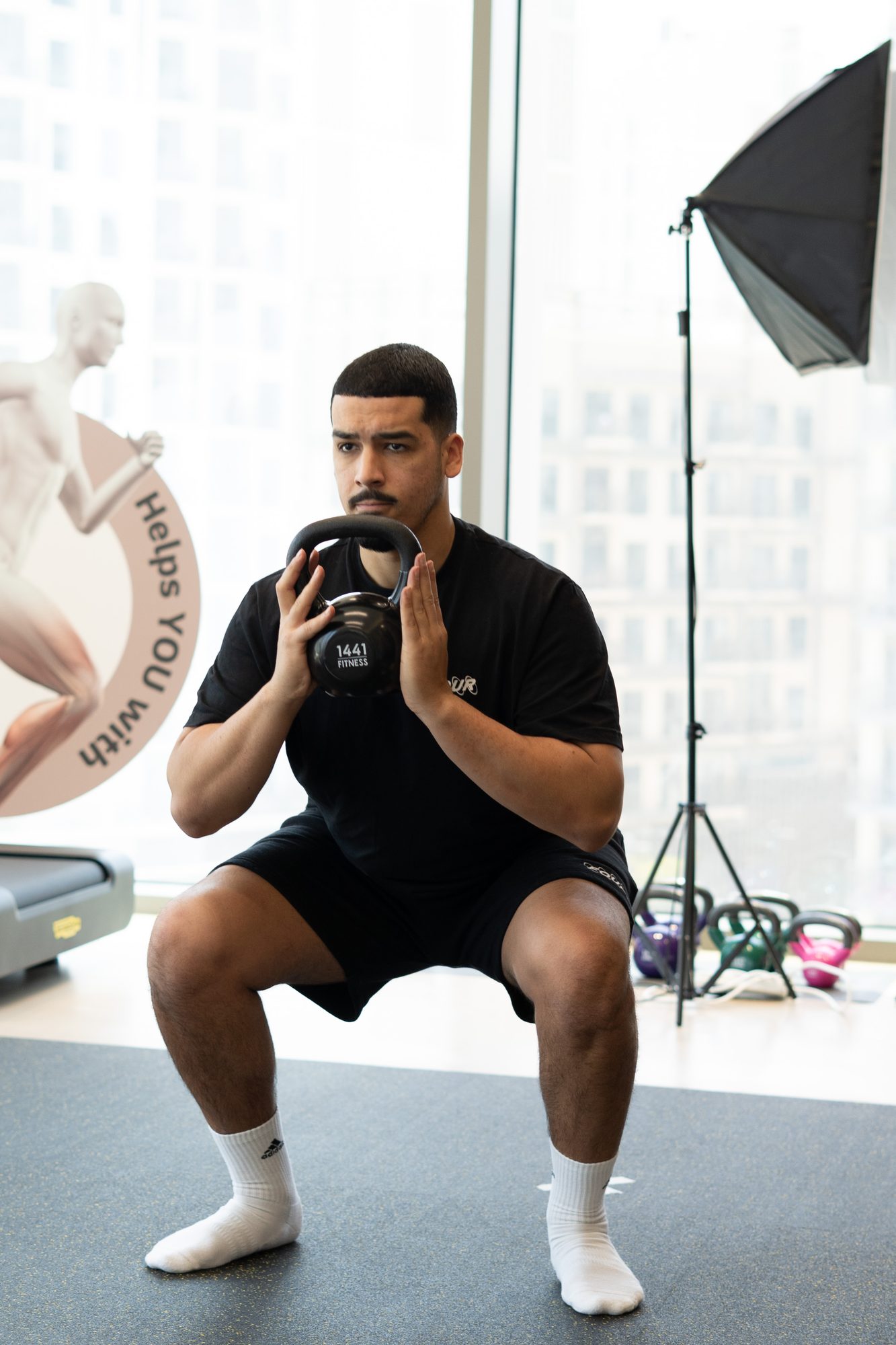
Kinetika sports rehabilitation session Dubai

Take the next step

Get Back in the Game

Tell us what's nagging you , we'll find what's driving it and build a plan that holds up under your training load.

Same-week appointments  ·  No referral needed  ·  Direct insurance billing

Common questions

Frequently Asked Questions

In most cases , no. Relative rest means modifying what aggravates the tissue while maintaining the rest of your training. We'll work out what to swap, reduce, or keep, so your fitness doesn't drop off while you recover.

It depends on the tissue and the injury. Muscle strains: 2–6 weeks. Tendinopathies: 8–12 weeks of progressive loading. Ligament injuries and post-op: 3–9 months. We'll give you a realistic timeline at the first session and benchmark against it weekly.

Usually no. Our assessment identifies whether imaging is actually needed or whether physio can start straight away. If we suspect something that needs a scan or sports physician, we'll refer you directly.

Absolutely. With your permission we'll liaise with your coach, S&C, or club medical team so the rehab plan integrates with your training , not fights against it.