Biofeedback

Biofeedback Real-time insight into how your body moves and responds. Biofeedback is a tool that turns invisible signals in your body, like muscle activity, into real-time data you can see

— min read

Real-time insight into how your body moves and responds.

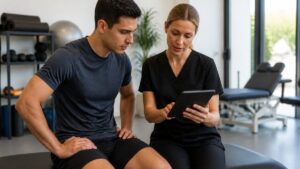
Biofeedback is a tool that turns invisible signals in your body, like muscle activity, into real-time data you can see on a screen. This gives both you and your physiotherapist powerful information to understand what your body is doing and how to change it.

At KINETIKA, we use biofeedback most often in pelvic floor physiotherapy, core retraining, and posture correction. It helps people learn how to properly activate or relax muscles that are hard to feel, such as the deep core or pelvic floor.

What it’s
used for

  • Pelvic floor dysfunction
  • Chronic tension and poor posture
  • Core activation and breathing coordination
  • Rehabilitation after childbirth or abdominal surgery
  • Nervous system regulation

Why it

works

When you can see what your body is doing in real time, you can train it more effectively. Biofeedback helps you connect with your body on a deeper level, especially when traditional cues are not enough.

What to
expect

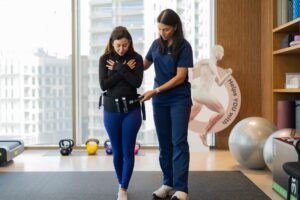
  • Small sensors are placed on your skin or used internally in pelvic health sessions
  • You’ll receive live visual or audio feedback during treatment
  • Progress becomes measurable and empowering

Your Next Step

Ready to move better?

Book a consultation with one of our expert physiotherapists and start your recovery today.

Book a Consultation

Optokinetic Stimulation

Optokinetic stimulation is a treatment tool that uses moving visual patterns (like stripes or dots) to help desensitise the brain to motion and reduce symptoms of dizziness, disorientation, or visual overload. It’s particularly helpful when visual environments trigger or worsen your symptoms.

Read More »

Skull Vibration Test

The Skull Vibration Test uses a gentle vibration behind the ear to stimulate the balance organs of your inner ear and detect if there’s a difference between the left and right sides. It is often used as a simple but powerful screening tool when dizziness or imbalance seems one-sided.

Read More »

Videonystagmoscope (VNS)

VNS is a diagnostic tool that uses infrared video goggles to directly observe and analyse eye movements in real time. Since the eyes and inner ear are functionally linked, monitoring these movements helps determine whether a patient’s dizziness or imbalance is related to peripheral vestibular dysfunction or central causes.

Read More »

Video Head Impulse Test (VHIT)

The VHIT evaluates how well your vestibulo-ocular reflex (VOR) is working — the reflex that keeps your eyes steady when your head moves. It helps us determine whether your inner ear canals are functioning properly, especially when you feel dizzy or unfocused during quick movements.

Read More »

Physiotherapy for Every Body, Every Day

Physiotherapy is not just for when something goes wrong — it is for keeping things right. At KINETIKA in Dubai Hills, we combine precision assessment with evidence-based care to help you move better and live stronger.

Read More »

Why We Now Assess Every Patient in 3D

Something fundamental changed in how we practise physiotherapy at Kinetika when we introduced KinetiSense™ 3D motion capture. Here’s what we decided, why we decided it — and what it means for every patient who walks through our door.

Read More »