Written by the Kinetika Team, Kinetika Physiotherapy · Reviewed: September 2026
If you live in the UAE, chances are your feet work harder than you think. Long mall walks, hours on marble floors, or standing all day at work it all adds up. By the time you’re home, that dull ache in your heels or arch isn’t just fatigue, it’s your feet asking for help. At KINETIKA Dubai, we see this every week. Patients walk in complaining of persistent foot pain or knee discomfort, and when we look closer, the real cause often traces back to flat feet or poor foot mechanics.
Understanding Flat Feet
Flat feet also called fallen arches simply means your foot’s natural arch is lower than usual. Some people are born with it, while others develop it over time due to lifestyle, footwear, or posture habits. When the arch collapses, it changes the way your body absorbs shock and distributes weight. Over time, that imbalance travels upward affecting the ankles, knees, hips, and even lower back.
Why Foot Pain Is So Common in the UAE
Living in Dubai comes with its own set of challenges for your feet:
- Hard flooring everywhere: Most homes, offices, and malls have marble or tiles, which put constant pressure on your feet.
- Long walking distances: Think about Dubai Mall, DXB airport, or City Walk thousands of steps in a day, often on unforgiving surfaces.
- Footwear choices: Flat sandals, heels, or shoes without proper arch support are a huge contributor to foot strain.
- Warm climate: Many people prefer open footwear, which often lacks cushioning or stability.
These factors make flat feet pain in the UAE a lot more common than people realize.
Signs You Might Need Help
You might not think about your feet until they start hurting, but here are a few red flags:
- Pain in your heels or arches after standing or walking
- Knee, hip, or back pain that worsens after long walks
- Uneven shoe wear patterns (one side wears out faster)
- Frequent ankle sprains or instability
- Fatigue even after short walks
If any of these sound familiar, your feet might not be getting the support they need.
How Custom Insoles Can Help
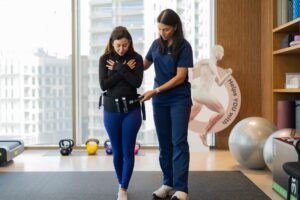
Custom insoles (also called orthotics) aren’t just about comfort they correct the way your feet move. At KINETIKA Physiotherapy Dubai, we perform a gait and foot assessment to analyze how your body moves from the ground up.
Based on that, we design custom orthotics that:
- Support the natural arch of your foot
- Improve alignment from your feet to your spine
- Reduce stress on joints and muscles
- Prevent long-term issues like plantar fasciitis or knee pain
These insoles are personalized not the kind you buy off the shelf and made to match how you walk, stand, and move.
Physiotherapy + Orthotics = Long-Term Relief
Custom insoles work best when combined with physiotherapy. Our team at KINETIKA helps strengthen and mobilize the muscles that support your arches, correct posture, and teach you how to move efficiently. Together, these steps don’t just relieve pain, they restore proper foot mechanics and keep future injuries away.
Conclusion
Your feet carry you through your entire day from your morning commute to late-night mall runs. Treating them well isn’t a luxury; it’s maintenance for your body. So if you’ve been ignoring that foot ache, it might be time for a professional check-up. At KINETIKA Physiotherapy Dubai, we’ll help you find out what’s really causing the discomfort and build a plan to keep you walking pain-free. Book your gait and foot assessment today and take the first step toward healthier, happier feet.