Sciatica & Pain Down the Leg
Sharp, shooting pain, tingling, numbness, or weakness down the leg can significantly affect movement, sleep, and daily life. We assess your spine, nerves, strength, and movement to understand what may be contributing to your symptoms and build a targeted rehabilitation plan.
Start here
Get the Right Diagnosis
Sciatica is a symptom, not a diagnosis. Our initial assessment pinpoints the exact source, so treatment is precise, not generic.
Book Your Initial AssessmentWhatsApp UsUnderstanding the Condition
What Causes Sciatica & Leg Pain
Disc Herniation
A lumbar disc herniation can irritate or compress a nerve root, causing pain, tingling, numbness, or weakness that may travel into the buttock and leg.
Spinal Stenosis
Narrowing of the spinal canal compresses nerve roots, causing pain, tingling, or weakness down the leg.
Piriformis Syndrome
The piriformis muscle can irritate the sciatic nerve as it passes through or beneath it in the buttock.
Sacroiliac Joint Dysfunction
Pain from structures around the lower back, hip, or pelvis can sometimes travel into the buttock or leg and resemble sciatica. A detailed assessment helps distinguish referred pain from nerve-related symptoms.
Disc Degeneration
Changes in the discs and joints of the spine are common as we age and do not always cause symptoms. In some cases, these changes may contribute to reduced space around a nerve and become relevant to leg pain.
Pregnancy & Postural Changes
Pregnancy brings changes in load, movement, and the musculoskeletal system that can contribute to lower-back, pelvic, or leg symptoms. A careful assessment helps distinguish nerve-related pain from other common pregnancy-related conditions.
How we treat it
The KINETIKA Approach
We assess your symptoms, spinal movement, strength, sensation, reflexes, and nerve function where appropriate to understand whether your leg symptoms are likely nerve-related and what may be contributing to them.
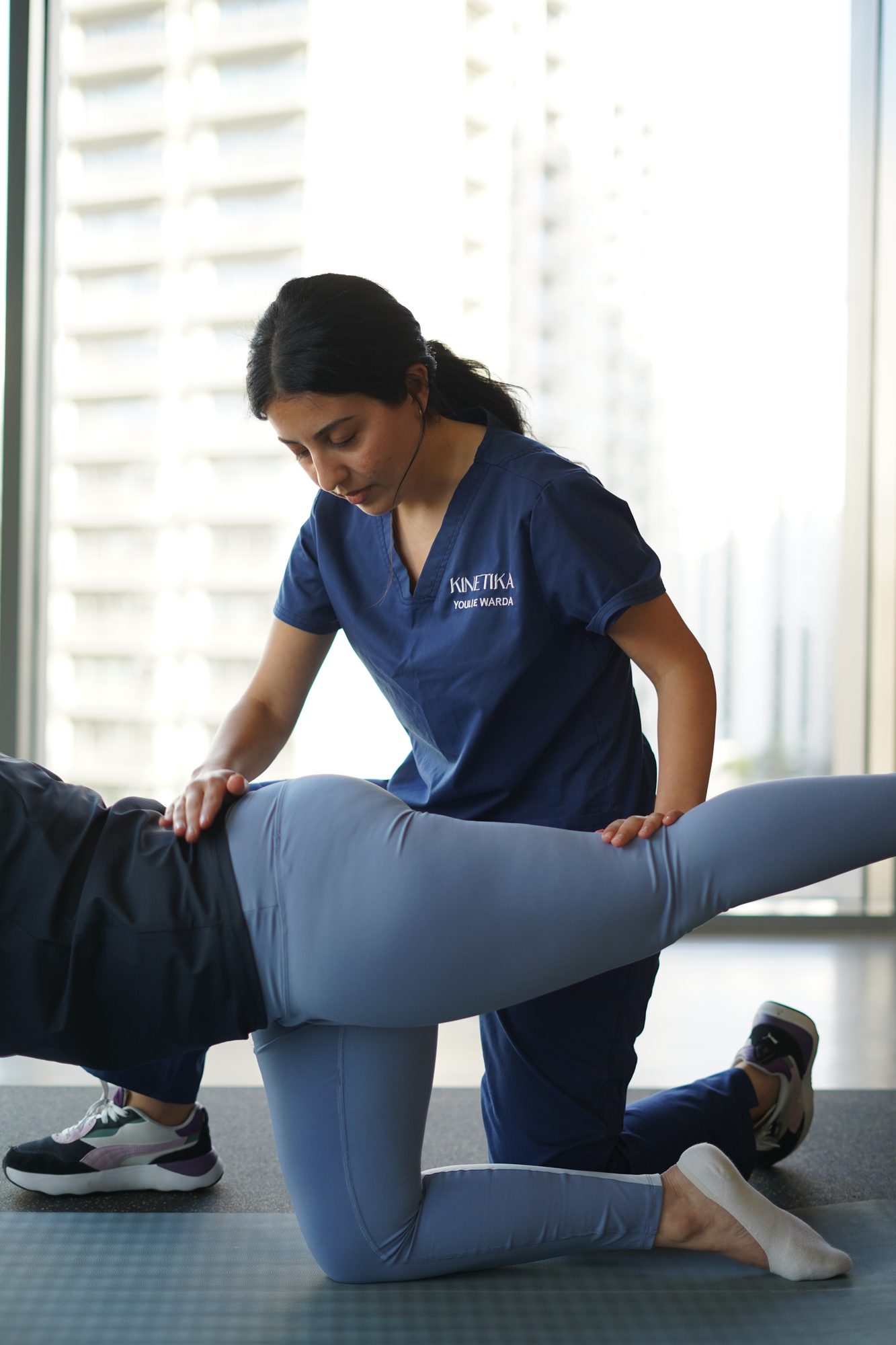
Manual therapy, positional techniques and targeted soft tissue work to reduce pressure on the nerve and calm referred leg pain.
Depending on your assessment, rehabilitation may include nerve-mobility exercises, directional exercises, progressive strengthening, and gradual exposure to the movements and activities that matter to you.
We help you progressively rebuild strength and confidence for sitting, lifting, exercise, work, and everyday activity, with practical strategies to help manage future flare-ups.
Take the next step
Book Your Initial Assessment
Tell us what's going on with your back. We'll find what's driving it and build a plan that gets you moving again.
Common questions
Frequently Asked Questions
True sciatica follows the sciatic nerve path, typically from the lower back through the buttock and down one leg. We assess your movement and neurological patterns during your initial consultation to confirm the source.
Mild cases often improve within 4 to 6 weeks with targeted physio. More complex cases involving disc herniation may take longer, but most people see meaningful improvement within 8 to 12 weeks.
Physiotherapy won't 'push a disc back,' but it significantly reduces nerve irritation, restores movement, and in many cases eliminates symptoms without surgery.
Medically reviewed by the Kinetika Clinical Team · Last reviewed 23 September 2026