Joint Mobilisation at KINETIKA
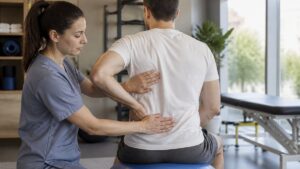
Joint mobilisation is a core manual therapy technique used at KINETIKA to restore normal movement in restricted joints. Whether the stiffness is in your spine, shoulder, hip, or ankle, skilled joint mobilisation addresses the mechanical causes of that restriction rather than simply managing symptoms.

How Joint Mobilisation Works
Your therapist applies controlled, oscillatory or sustained movements to a specific joint at its end range of motion. These movements are graded, from gentle, pain-free oscillations that calm an irritable joint, through to firmer movements that restore full range in a chronically stiff joint.
Mechanically, mobilisation restores the normal “arthrokinematics” of the joint, the rolling, spinning, and gliding movements between joint surfaces that must occur for full, pain-free movement. Neurologically, it stimulates mechanoreceptors within the joint capsule and surrounding tissue, modulating pain signals and improving the nervous system’s perception of that joint in space.
Conditions We Treat with Joint Mobilisation
- Cervical and lumbar spine stiffness
- Shoulder impingement and restricted glenohumeral mobility
- Hip joint restrictions and osteoarthritis
- Ankle stiffness following sprain or fracture
- Thoracic spine mobility for posture and breathing
- Wrist and hand restrictions following injury
What to Expect
Joint mobilisation should not be painful, though you may feel pressure or a gentle stretching sensation. Your therapist will assess your joint movement before and after each technique, progressing through grades based on your response. Most patients notice an immediate improvement in range of motion and a reduction in pain following the session.
Part of a Comprehensive Plan
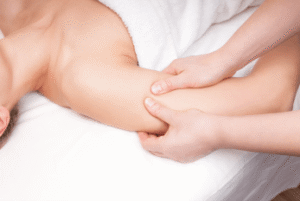
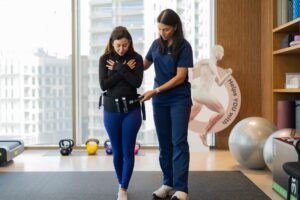
At KINETIKA, joint mobilisation is never used in isolation. It is combined with soft-tissue work, targeted exercise, and patient education to ensure that the improved joint mobility is maintained and supported by the surrounding musculature. The goal is lasting change, not just a good session.