Laser Therapy (Photobiomodulation)

Laser therapy uses targeted light energy to accelerate tissue healing, reduce inflammation, and relieve pain — a clinically validated tool in KINETIKA's rehabilitation technology suite.

— min read

Laser Therapy at KINETIKA

Laser therapy — technically known as photobiomodulation (PBM) — uses specific wavelengths of light to stimulate biological processes within tissue cells. It is one of the most extensively researched physical therapy modalities, with a substantial evidence base for accelerating tissue healing, reducing inflammation, and relieving both acute and chronic pain.

Laser therapy photobiomodulation treatment at KINETIKA

The Science of Photobiomodulation

Light in the red (630–700 nm) and near-infrared (780–1100 nm) wavelength ranges penetrates tissue and is absorbed by chromophores within the mitochondria — the cellular energy generators. This absorption triggers a cascade of effects:

  • Increased ATP (adenosine triphosphate) production, providing the cellular energy required for tissue repair
  • Modulation of reactive oxygen species, reducing oxidative stress in inflamed tissue
  • Release of nitric oxide, improving local circulation and vasodilation
  • Reduction in pro-inflammatory cytokines and mediators
  • Stimulation of fibroblast proliferation and collagen synthesis for tendon and ligament healing
  • Neurological effects including reduced nerve conduction velocity in pain fibres and endorphin release
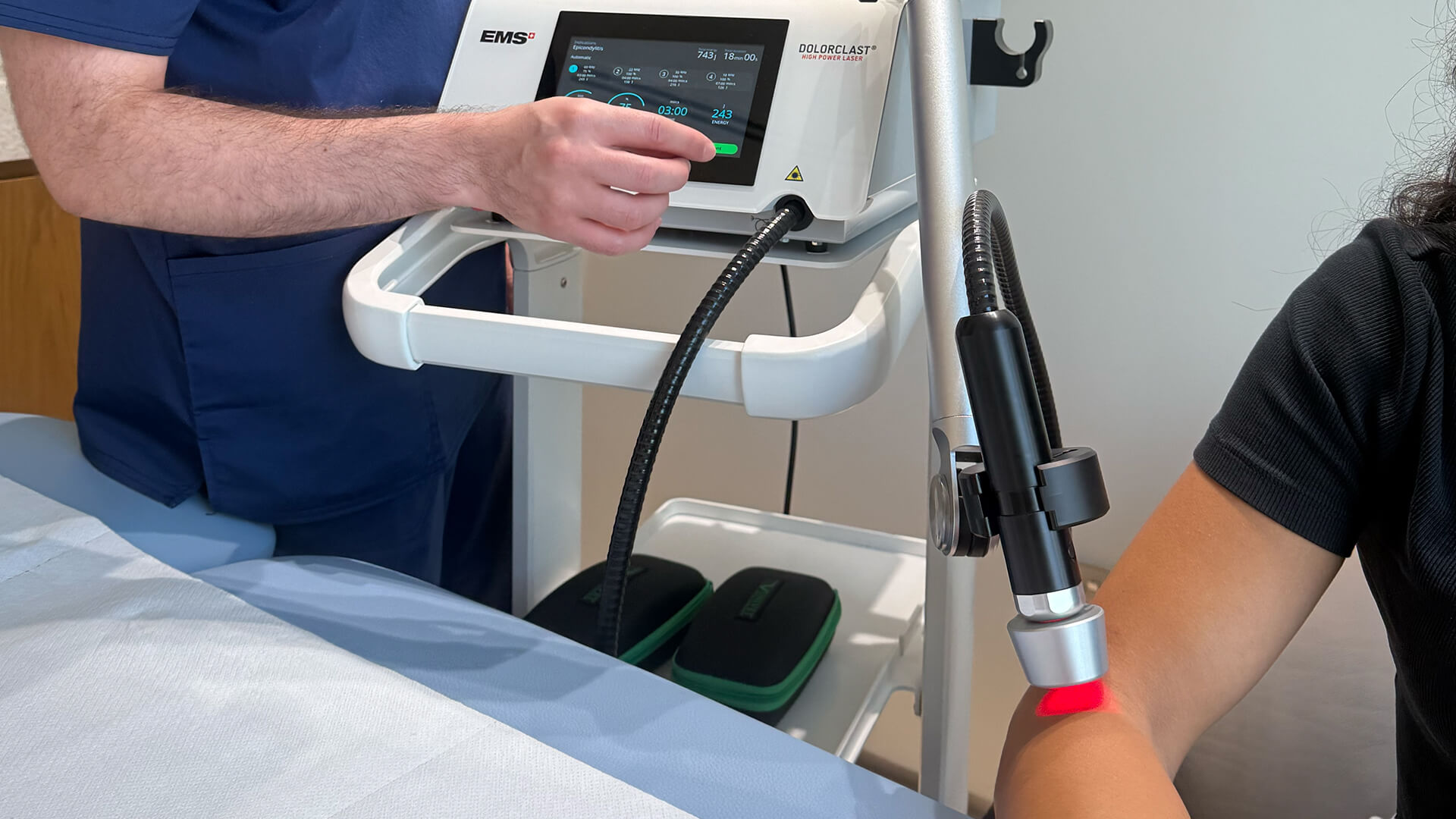
KINETIKA therapist performing laser therapy on patient

Conditions We Treat

Laser therapy at KINETIKA is applied across a range of musculoskeletal and soft tissue conditions:

  • Tendinopathies — Achilles, patella, rotator cuff, lateral epicondyle
  • Ligament sprains and joint capsule injuries
  • Muscle strains and contusions
  • Post-surgical wound healing and scar tissue maturation
  • Osteoarthritis pain management
  • Chronic pain syndromes
  • Nerve pain and peripheral neuropathy

What to Expect

Laser therapy is completely painless. The probe is applied directly to the skin over the target tissue, and treatment typically lasts 5–15 minutes per site. You will not feel heat or significant sensation during the treatment. Effects are cumulative — most patients require a course of 6–12 sessions, typically 2–3 times per week, with measurable improvement in pain and function beginning after 3–5 sessions.

Safety

Laser therapy is safe when applied by trained therapists. Protective eyewear is worn by both the therapist and patient. The therapy is contraindicated directly over malignant tissue, directly into the eye, and in certain other specific circumstances that your therapist will screen for at assessment.


Your Next Step

Ready to move better?

Book a consultation with one of our expert physiotherapists and start your recovery today.

Book a Consultation

Optokinetic Stimulation

Optokinetic stimulation is a treatment tool that uses moving visual patterns (like stripes or dots) to help desensitise the brain to motion and reduce symptoms of dizziness, disorientation, or visual overload. It’s particularly helpful when visual environments trigger or worsen your symptoms.

Read More »

Skull Vibration Test

The Skull Vibration Test uses a gentle vibration behind the ear to stimulate the balance organs of your inner ear and detect if there’s a difference between the left and right sides. It is often used as a simple but powerful screening tool when dizziness or imbalance seems one-sided.

Read More »

Videonystagmoscope (VNS)

VNS is a diagnostic tool that uses infrared video goggles to directly observe and analyse eye movements in real time. Since the eyes and inner ear are functionally linked, monitoring these movements helps determine whether a patient’s dizziness or imbalance is related to peripheral vestibular dysfunction or central causes.

Read More »

Video Head Impulse Test (VHIT)

The VHIT evaluates how well your vestibulo-ocular reflex (VOR) is working — the reflex that keeps your eyes steady when your head moves. It helps us determine whether your inner ear canals are functioning properly, especially when you feel dizzy or unfocused during quick movements.

Read More »

Physiotherapy for Every Body, Every Day

Physiotherapy is not just for when something goes wrong — it is for keeping things right. At KINETIKA in Dubai Hills, we combine precision assessment with evidence-based care to help you move better and live stronger.

Read More »

Why We Now Assess Every Patient in 3D

Something fundamental changed in how we practise physiotherapy at Kinetika when we introduced KinetiSense™ 3D motion capture. Here’s what we decided, why we decided it — and what it means for every patient who walks through our door.

Read More »