Written by the Kinetika Team, Kinetika Physiotherapy · Reviewed: September 2026
The Hidden Risks of Aging
As we age, natural changes in muscle mass, joint mobility, and nervous system function can affect:
- Balance and coordination
- Reflexes and gait
- Memory and mental alertness
These changes increase the risk of falls, which are the leading cause of injury among adults over 65 (Moreland et al.2020). One fall can lead to a long period of immobility, hospitalization, or loss of independence. But it doesn’t have to be that way.
Physiotherapy: A Powerful Tool for Prevention
At KINETIKA, our physiotherapy programs are specifically designed for seniors to target the three pillars of healthy aging:
1. Better Balance, Fewer Falls
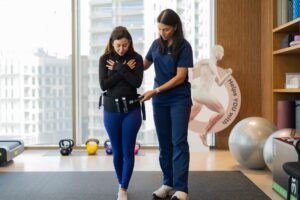
We assess balance, posture, walking patterns, and strength to detect fall risks early. Then we create tailored therapy sessions using:
- Proprioceptive exercises
- Balance platforms and gait training
- Functional movement retraining
These improve stability, confidence while walking, and reaction time, reducing the risk of falls at home or outside.
2. Boosting Brain Function Through Movement
You don’t need crossword puzzles alone to keep your brain sharp. Physical activity is just as important. Movement stimulates the brain, improves oxygen delivery, and strengthens the connections between body and mind.
Here’s how physiotherapy helps enhance cognitive health:
- Balance while reciting words: For example, standing on one leg while naming fruits or cities trains memory recall and focus under pressure.
- Obstacle course walking: Navigating soft hurdles or cones while following verbal instructions improves multitasking, attention, and spatial awareness.
- Rhythmic stepping to music: Combining coordination and rhythm enhances neuroplasticity, especially helpful for those in early stages of dementia.
- Simple chore simulations: Re-enacting real-life tasks (folding towels, picking up groceries) improves executive function and helps maintain independence at home.
- Mirror exercises with a partner or therapist: These sharpen visual processing and imitation ability, key in maintaining social and emotional responsiveness.
Even just 20-30 minutes of focused, guided movement a few times a week can contribute to better mental clarity, emotional balance, and independence.
3. Maintaining Strength and Independence
Falls aren’t just caused by poor balance.They often come from weak muscles or joint stiffness.
We help seniors:
- Regain lower limb strength to get up from chairs or climb stairs
- Maintain joint mobility and prevent contractures
- Improve hand grip and reaction time for daily activities
And because connection matters, we also offer small-group sessions for seniors, which promote:
- Social interaction and reduced isolation
- Motivation through peer support
- Fun, engaging cognitive-movement games
- A safe, supervised environment with professional guidance
Whether it’s one-on-one or group-based, our programs are designed to keep both the body and brain active. This supports longevity, independence, and emotional well-being.
What Makes Our Approach at Kinetika Different?
- One-on-one guided therapy sessions
- Ongoing reassessments and home-exercise programs
- Option to integrate custom insoles for posture and support
- Collaborative care with family or caregivers
Whether you’re recovering from a fall or looking to stay ahead of one, our physiotherapists are here to empower your movement and mind.