
TMJ & Jaw Physiotherapy · Dubai
Specialist physiotherapy for TMJ dysfunction, jaw pain, and orofacial conditions. We assess the joint, the muscles, the neck, and treat what we find, not just the symptoms.
TMJ dysfunction involves the jaw joint, the muscles of mastication, and often the cervical spine. We assess all three, and treat what's actually driving your symptoms.
Book AssessmentAssessment-led, no obligation
Sound familiar?
TMJ dysfunction can show up as headaches, ear pain, neck tension, or difficulty eating, and it's often misdiagnosed or overlooked entirely.
A click or pop when you open your mouth. Sometimes it catches. Sometimes it locks.
They start at your temple or behind your ear. Paracetamol doesn't touch them. No one's checked your jaw.
Eating an apple, yawning, or even a long dental appointment leaves your jaw aching and restricted.
You wake with a sore jaw, tooth sensitivity, or a headache. Your dentist says you're grinding, but the splint isn't enough.
You've been to the ENT. Ears are fine. The pain is actually referred from your jaw joint or muscles.
A long procedure, orthodontic adjustment, or wisdom tooth removal, and your jaw hasn't felt right since.
Why the splint isn't enough
| Dental splint alone | KINETIKA TMJ physiotherapy | |
|---|---|---|
| What it addresses | Tooth wear from grinding | The joint, muscles, movement patterns, and neck |
| Assessment | Dental occlusion | Jaw ROM, joint mechanics, muscle tension, cervical spine |
| Treats the cause? | Protects against damage | Identifies and treats what's driving the dysfunction |
| Intraoral work | No | Yes, with full consent, where clinically useful |
| Neck involvement | Not assessed | Jaw and neck assessed together (they're connected) |
| Long-term plan | Wear indefinitely | Progressive rehab toward resolution |
How we treat it
Detailed jaw, cervical, and orofacial examination including range, clicking, muscular tension, and habit patterns like clenching and grinding.
Internal and external manual therapy to the jaw and cervical spine, plus targeted soft-tissue work on the muscles of mastication.
Re-training jaw movement patterns, posture, and breathing so the joint loads correctly during everyday function.
Strategies for clenching, grinding, and stress-driven tension, alongside dental input where a splint is part of the plan.
Specialist care
TMJ dysfunction sits between physiotherapy and dentistry, and most patients fall through the gap. At Kinetika, our physiotherapists hold specialist training in TMJ anatomy, biomechanics, and intraoral assessment. We don't guess. We examine the jaw joint, the muscles around it, and the cervical spine that feeds into it.
And because the jaw rarely works in isolation, we coordinate with your dentist or maxillofacial surgeon. If a splint is part of the plan, we make sure the physio and the dental work reinforce each other instead of working at cross-purposes.
Certified in TMJ anatomy, biomechanics, and assessment. Not general physio applied to the jaw, but dedicated specialist training.
Where clinically useful and with full consent, internal jaw assessment and treatment. Always discussed first.
We coordinate with your dentist or maxillofacial surgeon. Splints and physio work best together.
TMJ rarely exists in isolation. We assess and treat the cervical spine alongside the jaw in every case.
Conditions we treat
Pain, restricted opening, and asymmetric movement from the joint and supporting muscles.
Joint sounds and intermittent locking, managed with movement re-education and manual therapy.
Pain that hasn't settled with rest, splints, or dental work alone.
Headaches driven by jaw clenching and cervical tension, addressed across jaw, neck, and posture.
Day and night grinding, co-managed with dental splint therapy where indicated.
Bell's palsy and facial nerve presentations. Neuromuscular retraining to restore symmetry.
Rehabilitation following orthognathic, TMJ, or oral surgery to restore range and function.
Jaw pain driven by upper cervical spine dysfunction, assessed and treated together.
Specialist assessment and conservative management in coordination with your medical team.
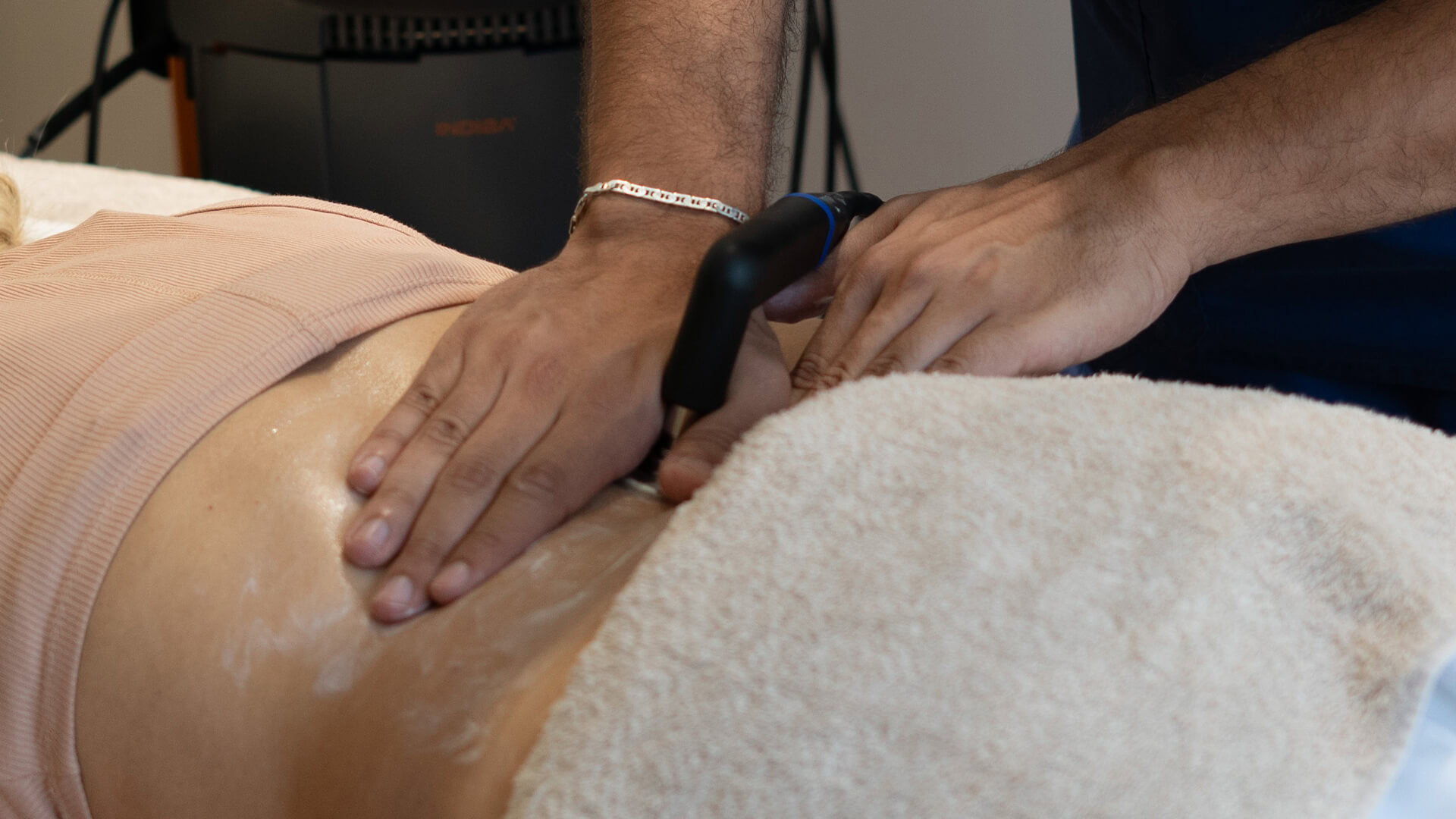
Inside the clinic
Real photos from our Dubai Hills clinic: the space, the equipment, and the care you’ll receive.


Meet your clinicians
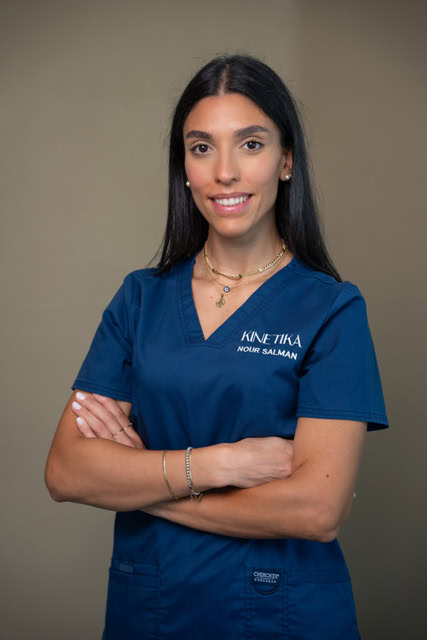
With a background at Cleveland Clinic and specialist focus on vestibular and TMJ rehabilitation, Nour brings a detailed, evidence-based approach to jaw assessment and treatment. She understands the connection between the jaw, the cervical spine, and the vestibular system, and treats them together.
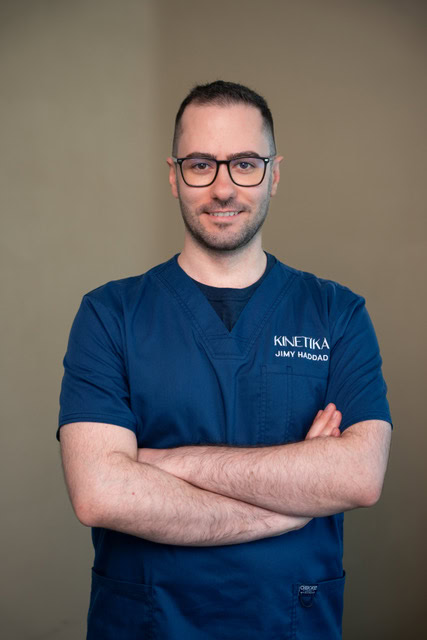
Certified in TMJ anatomy and biomechanics with advanced training in osteopathic manual therapy, Jimy combines precise jaw assessment with skilled hands-on treatment. His approach integrates intraoral technique, cervical spine mobilisation, and soft-tissue work for comprehensive TMJ care.
Why KINETIKA
What makes KINETIKA different from other clinics, and why patients stay with us.
Every plan starts with a detailed, research-backed assessment to find the root cause of your pain, not a one-size-fits-all protocol.
Every physiotherapist at KINETIKA is DHA-licensed and senior level, with 7-8+ years of specialist experience.
Skilled manual therapy combined with advanced rehab technology: shockwave, Tecar, laser, pressure-plate analysis and a fully equipped rehab gym.
Patients consistently rate us five stars on Google, for outcomes, honesty, and how we treat people.
We coordinate with your doctor, dentist or surgeon when needed, and our team speaks English, Arabic and French.
Common questions
Dentists focus on occlusion, tooth protection, and splint therapy. Physiotherapists assess and treat the joint mechanics, the muscles, and the movement patterns driving the dysfunction. The best outcomes usually come from both working together, which is exactly how we approach it.
Most mild to moderate TMJ cases respond well within 4-8 sessions. Chronic or complex presentations, particularly those involving bruxism, post-surgical recovery, or trigeminal involvement, may take longer. We reassess progress regularly and adjust the plan as you improve.
Yes. Intraoral assessment and treatment, where a gloved finger examines or treats the jaw muscles from inside the mouth, is an important clinical tool for TMJ. It is always discussed with you first, explained clearly, and only performed with your full consent.
Often yes, especially when clicking results from disc displacement or muscle imbalance. Manual therapy, movement re-education, and habit modification can significantly reduce or resolve clicking in many cases. Some painless clicks are benign and don't require treatment at all.
Yes. For post-surgical rehabilitation or complex cases requiring combined medical and physiotherapy input, we co-manage with maxillofacial surgeons and dental specialists. We're happy to communicate directly with your surgical team.
Take the next step
Bring any imaging, splints, or dental records you have. Your TMJ assessment includes a full jaw, neck, and orofacial examination, and a clear plan for what comes next.
TAKE THE FREE SELF CHECKBook an Assessment →Dubai Hills · +971 50 800 3206 · WhatsApp