
Visceral Mobilisation at KINETIKA
The internal organs of the body — the liver, kidneys, intestines, uterus, bladder — are not fixed in space. They move with every breath, every step, and every postural change. They are suspended by ligaments and fascial attachments to the musculoskeletal system, and they sit in close anatomical relationship to the spine, pelvis, and diaphragm.
When an organ loses its normal mobility — due to surgery, inflammation, adhesions, or chronic tension — this restriction can refer pain into musculoskeletal regions, contribute to pelvic floor dysfunction, alter breathing mechanics, or create postural patterns that no amount of exercise or joint mobilisation will fully resolve.
Visceral mobilisation is the skilled manual assessment and treatment of these organ mobility restrictions.
The Visceral-Musculoskeletal Connection
The relationship between visceral function and musculoskeletal pain is well-established but often overlooked. Common examples include:
- Right shoulder pain with liver or gallbladder restrictions
- Lower back pain associated with kidney or ureter tension
- Chronic pelvic pain linked to uterine or bladder adhesions (especially post-surgical)
- Diaphragm restrictions contributing to neck pain, breathing dysfunction, and thoracic stiffness
- Intestinal adhesions following abdominal surgery creating traction on the lumbar spine
Treatment
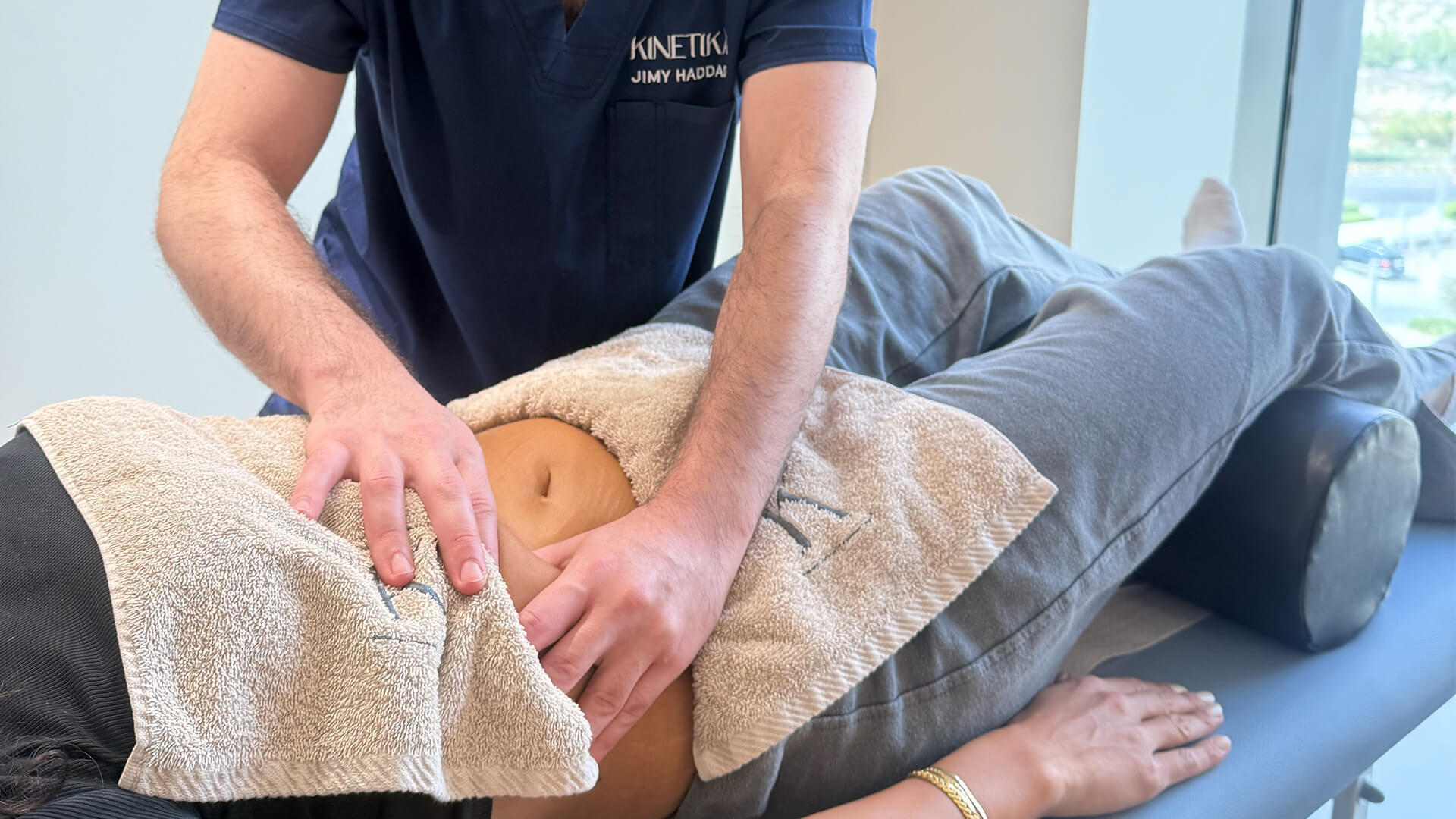
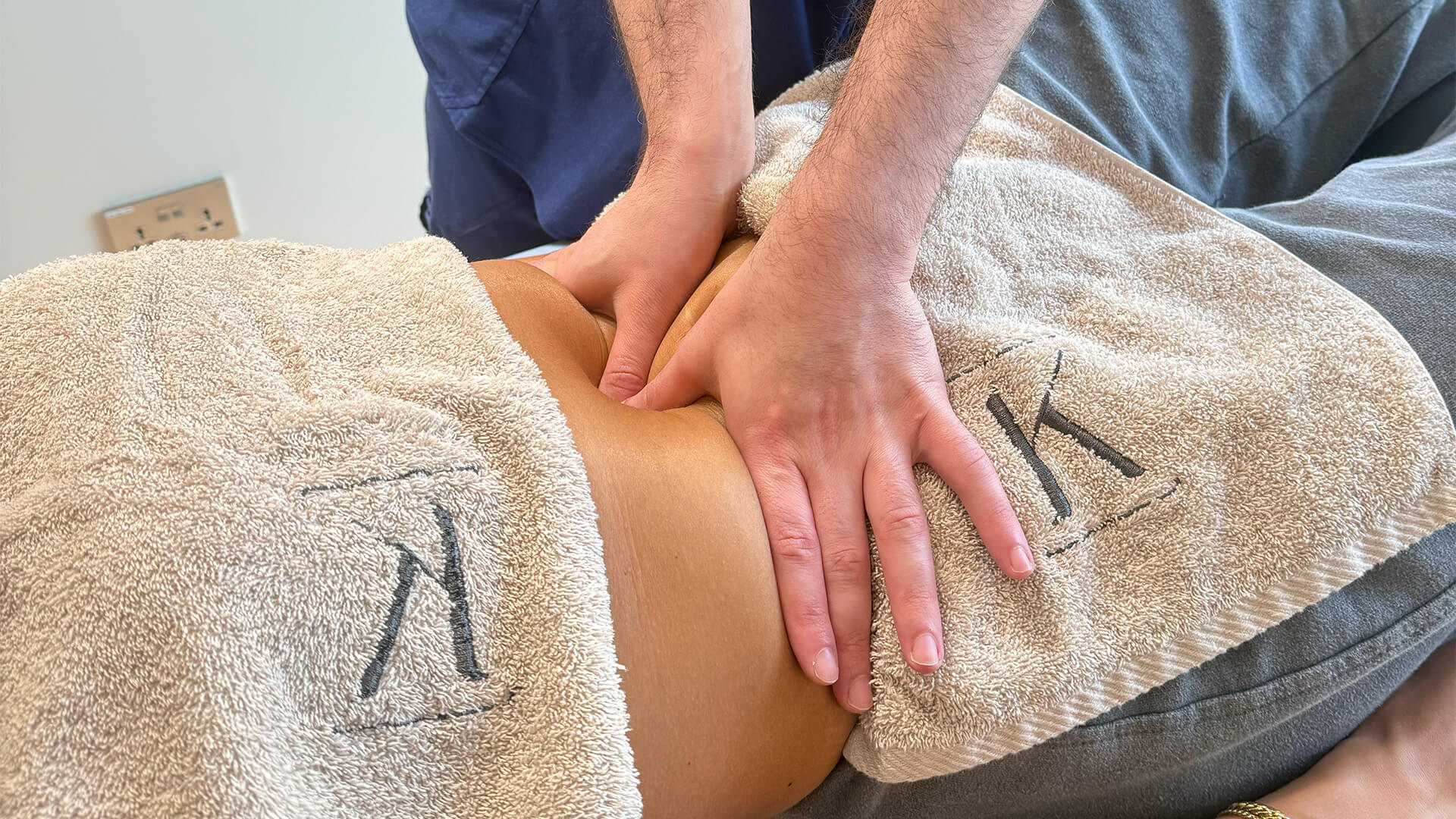
Your therapist uses very gentle, precise hands-on techniques to assess and treat organ mobility. The approach is deeply respectful of the patient’s comfort — visceral mobilisation should never produce discomfort. Treatment involves listening to the body’s inherent tissue rhythms, identifying restrictions, and applying gentle, sustained pressure to encourage the organ to release back to its optimal mobility.
Who Benefits
Visceral mobilisation is particularly relevant for patients with a history of abdominal or pelvic surgery (including caesarean section, hysterectomy, appendectomy, hernia repair), endometriosis, recurrent urinary tract infections, chronic constipation or bloating, pelvic floor dysfunction, and chronic back or pelvic pain that has not responded to conventional musculoskeletal treatment.
Integration with Pelvic Health
At KINETIKA, visceral mobilisation is a key component of our pelvic health programme. Many pelvic floor conditions have a visceral component — uterine positioning, bladder mobility, or bowel adhesions — that must be addressed for lasting resolution. Our pelvic health physiotherapists are trained in visceral assessment and integrate it into every comprehensive pelvic evaluation.