Last Updated: October 23, 2026
Quick Summary
Effective rehabilitation for chronic pain addresses physical, psychological, and social factors simultaneously through a structured, individualized approach rather than treating pain as a single symptom to suppress. It involves comprehensive assessment, graded movement, pacing strategies, and psychological support coordinated by an interdisciplinary team to restore function and improve quality of life.
- Most people notice meaningful change within 4-8 weeks of consistent, well-structured rehabilitation.
- Multidisciplinary teams combining physiotherapy, psychology, occupational therapy, and medical specialists produce better outcomes than isolated practitioners.
- Pacing prevents the boom-bust cycle by maintaining a sustainable baseline activity level, then gradually increasing it.
- Flare-ups are normal and do not indicate tissue damage or lost progress when managed with a written plan.
- Long-term success requires ongoing self-management including regular activity, stress management, and periodic reassessment.
Table of Contents
- What Is Chronic Pain Rehabilitation?
- The Interdisciplinary Approach to Pain Management
- Physiotherapy for Chronic Pain: Movement as Medicine
- Pacing Activities With Chronic Pain
- Pain Education and Psychological Approaches
- Building Your Chronic Pain Rehabilitation Programme
- Managing Flare-Ups and Long-Term Maintenance
- Frequently Asked Questions
What Is Chronic Pain Rehabilitation?
Chronic pain rehabilitation is a structured, individualized approach to persistent pain lasting beyond the typical healing period. Unlike acute pain, it involves complex physical, psychological, and social factors, and effective rehabilitation for chronic pain addresses all these dimensions simultaneously rather than treating pain as a single symptom to suppress. (Source: guidelines from clinical health authorities)
At KINETIKA, we understand that chronic pain requires comprehensive assessment and long-term management. The goal isn’t necessarily to eliminate pain, but to restore function, improve quality of life, and help individuals return to activities that matter to them.
The rehabilitation process typically involves identifying the root causes of pain through detailed assessment, then systematically rebuilding physical capacity, changing unhelpful pain behaviors, and developing self-management skills. Research from pain management guidelines published by clinical health authorities emphasizes that multidisciplinary assessment is essential for understanding whether pain stems from ongoing tissue damage, nervous system sensitization, deconditioning, or psychological factors, or most commonly, a combination of all three.
The Interdisciplinary Approach to Pain Management
Most people with chronic pain have seen multiple practitioners who each addressed one piece of the puzzle.
An interdisciplinary team, physiotherapists, psychologists, occupational therapists, and medical specialists, collaborates on a single, coordinated plan, preventing contradictory advice and ensuring psychological strategies support physical progress.
How Assessment Identifies Root Causes
Comprehensive assessment is where effective rehabilitation begins. A thorough evaluation examines not just where pain occurs, but how movement patterns, posture, muscle activation, psychological stress, and daily behaviors contribute.
Assessment also identifies which factors are modifiable and which require acceptance. Someone with arthritis cannot reverse joint damage but can significantly improve function through targeted strengthening and realistic goal-setting.
Why Multidisciplinary Teams Improve Outcomes
When a physiotherapist understands that pain is partly driven by catastrophic thinking and avoidance, they can build confidence gradually rather than pushing through fear. When a psychologist knows deconditioning is limiting function, they can incorporate behavioral activation.
Multidisciplinary rehabilitation also addresses social and vocational dimensions, where vocational rehabilitation and psychological support become critical.
Physiotherapy for Chronic Pain: Movement as Medicine
Physiotherapy is central to effective rehabilitation for chronic pain, but not in the way many expect.
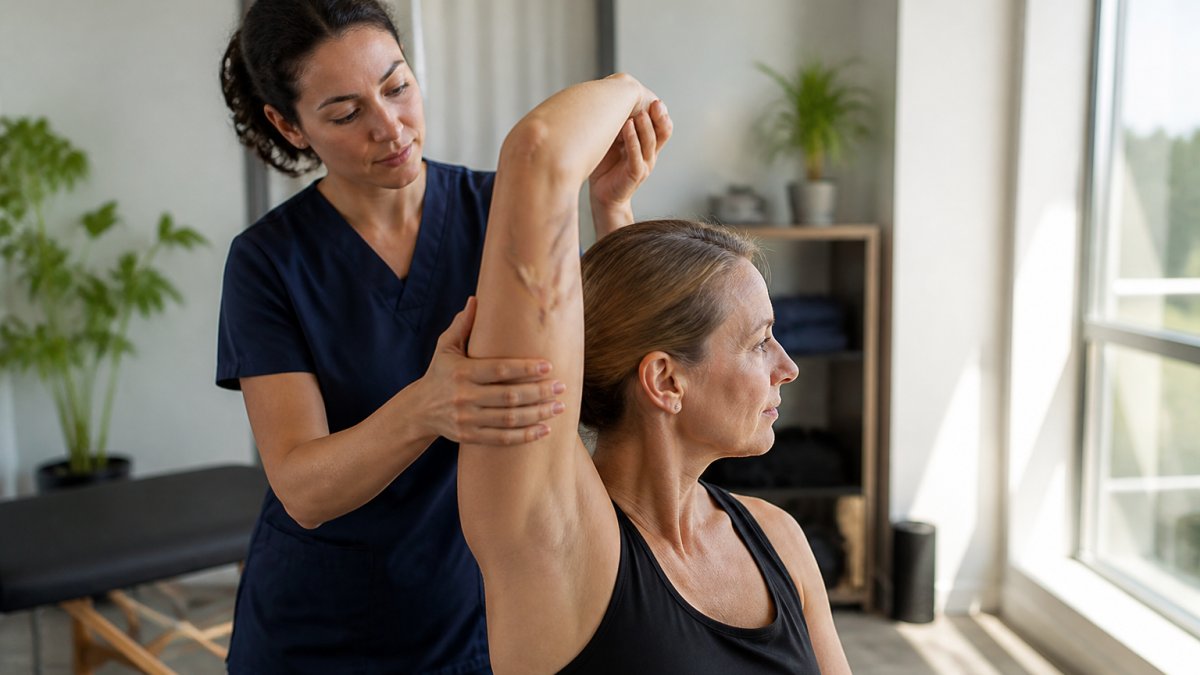
Movement itself has therapeutic value: regular, graded activity reduces nervous system sensitization, improves cardiovascular fitness, strengthens supporting muscles, and reinforces that movement is safe.
Strengthening, Stretching, and Mobility Training
Chronic pain often involves muscle weakness and stiffness that compounds the original problem. A person with lower back pain might develop weak abdominal muscles and tight hip flexors, increasing spinal load.
Effective programs progress gradually: initial phases establish correct movement patterns with minimal load, then resistance increases as confidence and strength improve.
Graded Exercise for Chronic Pain: Building Tolerance Safely
Graded exercise is a cornerstone of physiotherapy for chronic pain. Rather than exercising at a fixed intensity, it starts at a tolerable level without significant pain increase, then progresses systematically, building capacity while preventing the fear-avoidance cycle.
The key principle is consistency over intensity: modest regular activity produces better long-term outcomes than sporadic, intense efforts.
Pacing Activities With Chronic Pain
One of the most counterintuitive aspects of chronic pain management is pacing: deliberately limiting activity to a sustainable level rather than doing as much as possible on good days.
Effective pacing involves setting a baseline activity level that can be maintained consistently, then gradually increasing it.
Setting Realistic Goals and Tracking Progress
Clear, measurable goals transform rehabilitation from vague “feel better” intentions into concrete targets.
Tracking progress also provides motivation. When improvement is gradual, it’s easy to feel stuck unless specific metrics document change. Someone might not notice slightly reduced pain intensity, but will notice they can walk further before pain becomes limiting, or need pain medication less frequently.
Pain Education and Psychological Approaches
Physical rehabilitation alone often produces limited, temporary improvement. Chronic pain involves learned patterns, the nervous system has become sensitized to pain signals, and the person has developed protective behaviors that perpetuate dysfunction.
Pain education helps people understand that chronic pain doesn’t necessarily indicate ongoing tissue damage.
Cognitive Behavioral Therapy and Acceptance Strategies
Cognitive behavioral therapy (CBT) for chronic pain focuses on identifying and changing unhelpful thought patterns and behaviors that maintain pain.
Acceptance and commitment therapy (ACT) takes a different approach: rather than fighting pain, ACT helps people clarify what matters most and take action toward those values despite pain.
Building Your Chronic Pain Rehabilitation Programme
Effective rehabilitation for chronic pain is not a single product you can buy off the shelf. It is a structured programme built around your assessment findings, goals, and circumstances. Because programmes vary widely in team composition, intensity, and setting, the most useful skill you can develop is knowing how to compare them.
What a Well-Structured Programme Should Include
A credible programme typically starts with a comprehensive assessment rather than a standard exercise sheet, covering pain history, movement and strength, psychological factors such as fear of movement and low mood, sleep, daily activity patterns, work demands, and your goals. From there, the programme should combine:
- Education and self-management training so you understand why pain persists and what you can influence.
- Graded movement and strengthening progressed according to your response, not a fixed calendar.
- Pacing and activity planning to break the boom-bust cycle.
If a programme cannot describe these components clearly, ask why.
Credentials and Team Composition
Practitioners should hold a valid licence from the relevant health authority and work within their scope of practice. When comparing programmes, ask:
- Who will assess me, and who will deliver most of my sessions?
- Is there access to physiotherapy, psychology, occupational therapy, and medical review within the same team?
- How do team members communicate with each other about my plan?
A programme that coordinates several disciplines around one plan usually differs from fragmented care where each practitioner works in isolation.
Programme Intensity and Format
Programmes range from weekly one-to-one sessions to intensive multi-week group programmes. Neither is automatically better; the right intensity depends on your condition, capacity, and commitments. Ask: (Source: the impact of psychological factors on pain)
- How many sessions per week are recommended, and over what period?
- Is the programme delivered in person, remotely, or as a hybrid?
- What happens between sessions, and how is home practice supported?
Accessibility and Practical Questions
Practical barriers derail more programmes than clinical ones. Before committing, clarify:
- Appointment availability and waiting times.
- Whether sessions can be scheduled around work or caregiving.
- Physical accessibility of the facility and equipment availability.
Bring a short list of questions to your first appointment. A programme that welcomes scrutiny and explains its reasoning is usually a programme that is confident in its structure.
Questions to Ask Before You Commit
- What does the assessment involve, and will I receive a written summary?
- What outcomes will we track, and how often will we review them?
- How will the programme adapt if my pain flares up?
- What are the realistic time commitments per week?
- How will we know when I am ready to move to maintenance?
- What are the alternatives if this programme does not suit me?
These questions help you compare programmes on substance rather than marketing claims, and set expectations early, which improves engagement and reduces disappointment.
What to Expect: Typical Timeline and Milestones
Most people begin noticing meaningful change within 4-8 weeks of consistent, well-structured rehabilitation. Early improvements often involve reduced pain intensity, better sleep, or increased confidence in movement. Functional gains, working longer, exercising more, or managing daily activities with less limitation, typically follow.
Longer-term rehabilitation, spanning 3-6 months or more, can produce substantial gains, allowing nervous system changes to consolidate, strength to build, and new movement patterns to become automatic. Expecting rapid, complete pain elimination often leads to disappointment; expecting gradual, progressive improvement sustains motivation.
Timelines are individual. Your progress depends on the nature of your pain, your starting capacity, and how consistently you can engage with the plan. A programme that promises a fixed outcome in a fixed time is not giving you useful information.
Measuring Progress Objectively
Progress is easier to sustain when measured. A well-structured programme should track outcomes across several domains, not just pain intensity:
- Pain: average intensity, frequency of flare-ups, and medication use.
- Function: walking tolerance, stair climbing, lifting, and tolerance for daily tasks.
- Mood and confidence: fear of movement, anxiety, and low mood.
Reviewing these measures at agreed intervals helps you and your team see what is working and adjust what is not, and protects against judging progress by pain alone, which can fluctuate for reasons unrelated to tissue damage.
Managing Flare-Ups and Long-Term Maintenance
Even with successful rehabilitation, occasional pain flare-ups occur. A flare-up is a temporary increase in pain, often triggered by a change in activity, stress, sleep disruption, or illness. The difference between a setback and a manageable event is usually how you respond: people with effective self-management skills recognise a flare-up as temporary, adjust activity slightly while maintaining movement, review stress and sleep, and avoid fear-driven immobilisation.
Why Flare-Ups Happen
Flare-ups are common and do not necessarily mean you have damaged tissue or undone your progress. Common triggers include:
- Doing more than usual on a good day, then paying for it later.
- A change in routine, travel, or work demands.
- Poor sleep, illness, or emotional stress.
Understanding triggers helps you plan around them rather than being surprised by them.
A Practical Flare-Up Plan
A simple, written plan agreed with your practitioner reduces panic and keeps you moving. A common approach:
- Reduce, do not stop. Scale activity back to a level you can manage, but keep moving gently.
- Protect sleep and routine. Keep regular sleep and meal times where possible.
- Review load. Identify what changed in the days before the flare-up and adjust.
- Use calming strategies. Breathing, relaxation, and gentle mobility can reduce protective tension.
- Set a review point. If the flare-up is not settling within an agreed period, seek clinical advice.
A flare-up plan is not a sign of failure. It is a sign that you and your team have anticipated a normal part of rehabilitation and prepared for it.
Pacing and Safety
Pacing means breaking activity into manageable chunks and alternating activity with rest before pain forces you to stop. It is not the same as avoiding activity. The aim is to stay active at a level your body can tolerate consistently, then build gradually. Safety points worth agreeing with your practitioner include:
- How much activity to maintain during a flare-up.
- Which exercises to keep, reduce, or pause temporarily.
- How to progress again once symptoms settle.
When to Seek Reassessment
Most flare-ups settle with sensible adjustment. Seek clinical review if you notice:
- New weakness, numbness, or loss of coordination.
- Pain that is severe, unrelenting, or different in character from your usual pain.
- Difficulty with bladder or bowel control, or saddle numbness.
These signs do not necessarily indicate something serious, but warrant prompt assessment rather than watchful waiting.
Long-Term Maintenance
Long-term success requires ongoing self-management: regular activity and exercise, attention to posture and movement patterns, stress management, and periodic reassessment when new demands emerge. Maintaining gains usually requires less effort than achieving them initially; a modest amount of consistent activity prevents regression.
A maintenance plan typically includes:
- A weekly activity routine that includes strength, mobility, and cardiovascular work.
- A pacing strategy for busy periods.
- A sleep and stress routine.
Measuring Outcomes Over Time
Maintenance is easier when you track a small number of meaningful measures. Consider recording:
- Average pain and flare-up frequency.
- Activity tolerance, such as walking time or exercise load.
- Work and social participation.
Reviewing these over time helps you spot early signs of regression and adjust before a small setback becomes larger, and gives you concrete information to share with your practitioner at review appointments.
| Rehabilitation Phase | Timeline | Key Focus | Expected Outcome |
|---|---|---|---|
| Initial Assessment & Education | 1-2 weeks | Understanding pain, establishing baseline | Clarity on causes and direction |
| Early Rehabilitation | Weeks 2-8 | Pain reduction, confidence building, basic strengthening | Improved function, reduced pain intensity |
| Progressive Rehabilitation | Weeks 8-16 | Advancing strength and endurance, return to activities | Return to work, hobbies, or sports |
| Maintenance & Prevention | Ongoing | Sustaining gains, managing flare-ups | Long-term function and independence |
Frequently Asked Questions
What is the most effective rehabilitation for chronic pain?
Effective chronic pain rehabilitation combines physiotherapy, pain education, and psychological approaches tailored to your condition. Assessment-led care that identifies root causes, rather than treating symptoms alone, produces better outcomes. Multidisciplinary programmes that blend movement, strengthening, and behavioral strategies help restore function and reduce pain intensity. The most effective approach addresses your specific needs, whether post-surgical recovery, sports injury management, or long-term pain control.
How does graded exercise for chronic pain differ from regular exercise?
Graded exercise for chronic pain involves gradually increasing activity intensity and duration in a structured, supervised way. Unlike standard exercise, it starts at a level you can tolerate and progresses only when you’re ready, preventing flare-ups and building confidence. The approach focuses on functional improvement, regaining the movements and activities that matter to you, rather than pushing through pain. Physiotherapists monitor your response and adjust the plan to ensure lasting progress without setback.
What does pacing activities with chronic pain actually mean?
Pacing means breaking daily tasks into manageable chunks and spacing them throughout the day to avoid exhaustion and flare-ups. Instead of doing as much as possible on good days (then suffering setback), pacing maintains a consistent activity level that your body can sustain. You learn to recognize your personal limits, alternate between activities, and build in rest periods. This strategy, combined with graded exercise, helps you stay active without triggering pain cycles, improving both function and mood over time.
How long does a chronic pain rehabilitation programme typically take?
Duration varies based on your condition, severity, and goals. Most structured programmes run 8-12 weeks, though some require longer engagement. Your physiotherapist will establish milestones early and adjust the timeline based on your progress and response to treatment.
Can chronic pain improve if I’ve had it for years?
Yes. Long-standing chronic pain can improve with the right rehabilitation approach. Even if previous treatment focused only on symptom relief, addressing root causes through assessment-led physiotherapy, graded movement, and pain education can restore function and reduce pain. Recovery may take longer than for recent injuries, but evidence shows that structured rehabilitation helps people regain activities they thought were lost. The key is finding a programme that treats the underlying dysfunction, not just managing pain in isolation.
What is the role of cognitive behavioral therapy in chronic pain rehabilitation?
Cognitive behavioral therapy (CBT) and acceptance-based approaches help you understand how thoughts, mood, and behavior influence pain perception and disability. These techniques reduce catastrophizing, build coping skills, and improve stress management, all of which lower pain intensity and improve quality of life. Combined with physiotherapy and movement, psychological approaches address the emotional and behavioral factors that often keep pain cycles active. This integrated strategy produces better outcomes than physiotherapy or psychology alone.
How do I know if a rehabilitation programme is actually working?
Progress is measured through specific, observable changes: reduced pain intensity during or after activity, improved range of motion, ability to do daily tasks with less difficulty, better sleep, and improved mood. Your physiotherapist should establish clear goals early and track these markers regularly. Functional milestones matter most, returning to work, playing with family, or resuming a hobby, not just pain scores. If you’re not seeing measurable improvement within a reasonable timeframe, discuss adjustments to your programme with your therapist.
What should I do if my pain flares up during rehabilitation?
Flare-ups are common and do not mean rehabilitation has failed. Reduce activity intensity temporarily, apply pain management techniques you’ve learned, and contact your physiotherapist for guidance. Most flare-ups resolve within a few days with proper pacing and self-management. Your therapist will help you identify triggers and adjust your programme to prevent future episodes. Flare-ups are learning opportunities, they help you understand your pain pattern and refine your long-term maintenance strategy.