Written by the Kinetika Team, Kinetika Physiotherapy · Reviewed: October 2026
By Jimy Haddad | Physiotherapist at KINETIKA Physiotherapy Dubai
You’re sitting comfortably.
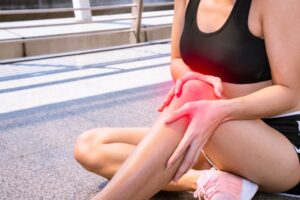
Then you stand up… and feel that sharp, heavy, or uncomfortable sensation in your knee.
Or maybe stairs have become something you mentally prepare for.
And during prayer, especially when moving into sujood or rising back up, the knee suddenly feels stiff, painful, or weak.
This type of knee pain is very common.
But it’s not random.
Let’s break down why it happens, and what you can realistically do about it.
Why Does the Knee Hurt During These Movements?
Movements like:
- Standing up from a chair
- Going up or down stairs
- Squatting or kneeling
- Transitioning during prayer
all require deep knee bending under load.
When your knee bends, the pressure between the kneecap (patella) and the thigh bone (femur) increases significantly. In fact, stair climbing can load the knee joint with 3 to 4 times your body weight.
If the muscles around the hip and knee are not strong or well-coordinated, the joint absorbs more stress than it should.
Over time, this leads to irritation.
This condition is often related to:
- Patellofemoral pain syndrome
- Early cartilage overload
- Tendon irritation
- Muscle imbalance
- Reduced ankle mobility
The key point:
It’s usually a load management issue, not “damage.”
Why Is It Worse When Going Down Stairs?
Going down stairs requires something called eccentric quadriceps control.
This means your thigh muscle must slowly control your body weight as you descend.
If that control is weak:
- The kneecap experiences higher stress
- Pain increases
- The knee may feel unstable or shaky
This is why many people say:
“Going up is fine. Going down is worse.”
Why Does Prayer Sometimes Trigger It?
During kneeling and sujood:
- The knee bends deeply
- Joint compression increases
- Soft tissues are stretched under load
If there is underlying sensitivity, stiffness, or weakness, these repeated transitions can trigger discomfort.
This becomes more noticeable during periods like Ramadan when frequency increases.
What Can You Do to Prevent or Reduce It?
1️⃣ Strengthen the Muscles That Protect the Knee
Focus on:
- Quadriceps strength
- Glute strength
- Hip stability
Simple starting exercises:
- Controlled sit-to-stand
- Step-down exercises
- Wall sits (within pain-free range)
- Bridges
- Side-lying hip abduction
Stronger hips reduce stress on the knee joint.
2️⃣ Improve Ankle and Calf Mobility
Limited ankle dorsiflexion increases knee pressure during:
- Stairs
- Squatting
- Prayer transitions
Calf stretching and ankle mobility work can significantly reduce knee strain.
3️⃣ Control the Speed of Movement
Avoid:
- Dropping quickly into chairs
- Rushing down stairs
- Pushing up aggressively from the floor
Move with control.
The knee tolerates load better when it’s gradual.
4️⃣ Modify When Necessary (Especially During Prayer)
If pain is significant:
- Use a prayer chair temporarily
- Place a thicker mat for cushioning
- Reduce depth slightly
- Shift more load toward the hips when standing up
- Rise in stages instead of one explosive movement
Modifying is not a failure. It’s smart joint management.
5️⃣ Don’t Ignore Persistent Swelling, Instability, or Ongoing Pain
If you notice:
- Visible swelling
- Recurrent catching or locking
- A feeling that the knee might “give way”
- Pain lasting more than 2 to 3 weeks
- Increasing discomfort despite rest
This is no longer something to simply “manage at home.”
While many cases are load-related and improve with exercise, persistent symptoms may indicate:
- Meniscus involvement
- Ligament irritation
- Progressive cartilage overload
- Early osteoarthritis
- Significant biomechanical imbalance
At this stage, guessing is not the solution.
A proper medical or physiotherapy assessment can:
- Identify the real source of the pain
- Determine whether imaging is necessary
- Create a structured rehabilitation plan
- Prevent the condition from becoming chronic
The earlier you address it, the easier and faster the recovery tends to be.
If your knee pain is limiting your stairs, daily movement, or prayer, don’t wait for it to worsen.
Consult a physician to rule out structural issues, or book a physiotherapy assessment to evaluate strength, mobility, and movement control.
Taking action early can prevent months of avoidable discomfort.