Last Updated: November 2, 2026
Quick Summary
Postpartum pelvic floor recovery starts with gentle breathing and short, comfortable muscle holds, then gradually builds to longer holds, daily activity and a staged return to exercise. Progress should be guided by symptoms: pain, heaviness or leaking means slow down and get checked.
- Start with gentle breathing and short holds lying down in the early weeks.
- Exhale as you lift the pelvic floor and let it fully release afterwards.
- Begin with 5 repetitions three times a day, adding one every few days up to 10.
- After a C-section, avoid crunches, sit-ups and abdominal curls until your provider confirms it is safe.
- Return to running or jumping only after walking, strength work and low-impact cardio are symptom-free.
Table of Contents
- Why Pelvic Floor Recovery Matters After Birth
- Pelvic Floor Exercises After Birth: What to Expect Week by Week
- Postpartum Pelvic Floor Recovery Timeline for Vaginal Birth and C-Section
- Step-by-Step Pelvic Floor Exercise Instructions
- Pelvic Floor Exercises After C-Section: Adjusting the Approach
- Signs of Pelvic Floor Dysfunction After Childbirth to Watch For
- Booking Your Pelvic Health Assessment at Kinetika
- Frequently Asked Questions
Why Pelvic Floor Recovery Matters After Birth
Pregnancy and childbirth put real strain on the pelvic floor, the group of muscles that supports the bladder, bowel and uterus. Pelvic floor recovery is the process of rebuilding strength, coordination and control in those muscles after birth. Many women are not told this clearly, so they assume leaking, heaviness or discomfort is simply something to live with. (Source: research on maternal health)
It doesn’t have to be. Recovery works best when it starts early and follows a gradual plan. A professional assessment can show where your recovery stands. You can learn more about pelvic health support for postpartum concerns.
Common reasons recovery matters include:
- Better bladder and bowel control
- Less pressure or heaviness in the pelvis
- A smoother return to daily activity and exercise
- Support for the core and lower back
Pelvic Floor Exercises After Birth: What to Expect Week by Week
Recovery is gradual, and the pace differs from one woman to the next. The early weeks focus on gentle activation rather than hard work. Over time, the exercises become longer, stronger and more varied.
Most women can expect a pattern like this:
- Early weeks: Gentle breathing, light muscle awareness and short holds while lying down
- Middle weeks: Longer holds, more repetitions and added support movements such as bridges
- Later weeks: Coordination with standing, walking and lifting, with a gradual return to exercise
Progress should feel steady. Pain, heaviness or a sense of bearing down are signs to slow down and get checked.
Postpartum Pelvic Floor Recovery Timeline for Vaginal Birth and C-Section
The timeline is not the same after every birth. A vaginal birth and a C-section place different demands on the body, so each recovery plan needs its own timing. The ranges below are general patterns, not prescriptions; an assessment is the only way to set a plan for your own birth and symptoms.
| Birth Type | Early Focus (roughly weeks 0-2) | Middle Phase (roughly weeks 2-6) | Later Phase (roughly weeks 6-12 and beyond) | Key Consideration |
|---|---|---|---|---|
| Vaginal birth, no significant tear | Gentle breathing, pelvic floor awareness, short holds lying down | Longer holds, pelvic tilts, bridges, sitting and standing coordination | Walking volume, lifting mechanics, staged return to impact | Perineal discomfort usually guides the pace |
| Vaginal birth with tear or episiotomy | Gentle activation, perineal comfort, avoiding straining | Gradual holds as tissue settles, scar comfort work | Coordination with daily activity, return to exercise | Pain, pulling or stinging means slow down |
| C-section | Gentle activation, abdominal healing, breathing | Core support, scar awareness, short holds | Gradual core work, lifting mechanics, return to exercise | Avoid crunches, sit-ups and abdominal curls until cleared |
| Birth with complications (for example significant blood loss, infection, or pelvic girdle pain) | Rest and breathing, professional review before loading | Individualised pacing | Gradual progression guided by symptoms | Get individual guidance before progressing |
Symptom-Based Progression and Stop Signs
Progress should feel steady, not heroic. Use symptoms as your guide rather than the calendar alone. Reduce the load or stop and get checked if you notice:
- Pain during or after exercise
- Heaviness, dragging or a bulging feeling in the vagina
- Leaking that increases with the new exercise
- Bleeding or discharge that restarts or increases
- Lower back or pelvic pain that does not settle within a day
A common pattern is to feel fine during the exercise and notice symptoms later the same day or the next morning. If that happens, drop back to the previous level for a week before trying again.
Returning to Impact and Sport Readiness
Returning to running, jumping or sport is a separate progression from returning to daily activity. A staged pathway is more useful than a single date:
- Walking comfortably for 30 minutes without symptoms
- Strength work for the legs, hips and trunk without symptoms
- Low-impact cardio such as cycling or swimming
- Brief impact drills, such as 10 to 20 seconds of marching or light skipping, building gradually
- Running, then jumping, then sport-specific training
Each stage should be symptom-free before moving on. If leaking, heaviness or pain appears at a stage, return to the previous stage for a week or two.
A qualified professional can help you decide when to start and how fast to progress.
Step-by-Step Pelvic Floor Exercise Instructions
These steps offer a general starting point. Work at a comfortable level, and stop if anything hurts. The aim in the first weeks is coordination, not maximum effort.
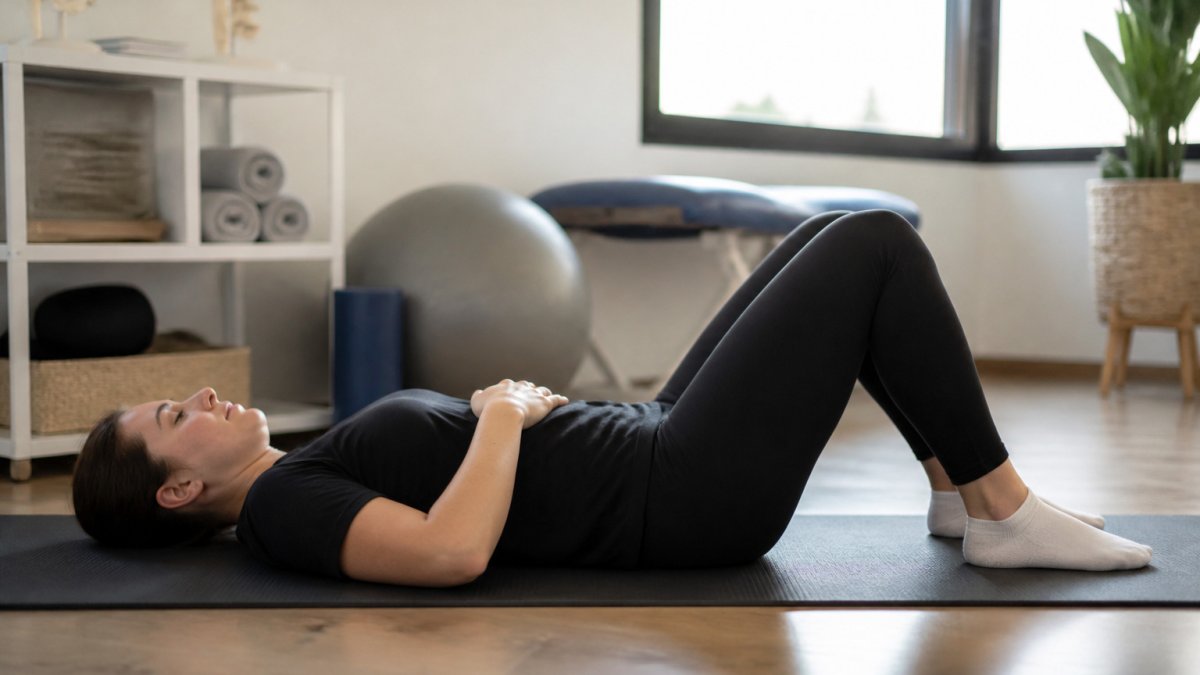
- Lie on your back with your knees bent and feet flat on the floor, or sit tall on a firm chair if lying down is uncomfortable.
- Breathe in slowly through your nose and let your lower ribs widen. Let the pelvic floor soften on the inhale rather than gripping.
- Breathe out gently and lift the pelvic floor, as if stopping the flow of urine and holding back wind at the same time. The lift should feel like an internal squeeze and draw-up, not a buttock clench or a leg squeeze.
- Hold for 3 to 5 seconds while breathing normally. If you cannot breathe and hold at the same time, shorten the hold.
- Release slowly and fully, taking about the same time to let go as you took to lift. Rest for 5 to 10 seconds before the next repetition.
- Start with 5 repetitions, three times a day, and add one repetition every few days up to 10 per set as control improves.
Watch out: Bearing down, holding your breath, or squeezing the buttocks and thighs usually means the pelvic floor is being pushed rather than lifted. If you feel pressure or bulging, stop and reduce the effort.
Activating and Relaxing the Pelvic Floor
Strength alone is not the goal. The pelvic floor also needs to relax fully between contractions. A common pattern after birth is an overactive or tight pelvic floor, where the muscles struggle to let go. Women with this pattern may feel pain with intercourse, urgency, constipation, or a constant feeling of tension, and adding more Kegels can make symptoms worse.
A simple relaxation drill is the reverse Kegel: sit or lie comfortably, inhale, and imagine the pelvic floor widening and dropping slightly, as if gently letting go before passing wind. Hold the softened feeling for 3 to 5 seconds, then return to neutral. Practise 5 slow repetitions once or twice a day. If relaxation feels impossible, or if lifting causes pain, an assessment is more useful than more repetitions.
Breathing and Coordinating With Movement
Breath and movement work together. Exhale as you lift, and inhale as you release. Once lying-down exercises feel steady, add small movements such as a pelvic tilt or a bridge, keeping the spine neutral and the ribs stacked over the pelvis. A useful rule is to lift before effort and release after: lift gently before standing up, coughing, lifting a car seat, or picking up a toddler, then let go once the effort is over.
!Woman lying on her back on a padded mat with knees bent and feet flat, relaxed in a bright private physiotherapy room
Common Mistakes and Technique Cues
- Squeezing the buttocks or inner thighs instead of the pelvic floor
- Pulling the belly in hard rather than letting the ribs widen on the inhale
- Holding the breath through the hold
- Letting go too quickly, so the muscle never fully rests
- Doing many fast repetitions before slow control is established
A mirror is not useful for pelvic floor technique, but a hand on the lower abdomen can help you notice whether you are bracing or bearing down. If you cannot tell whether you are lifting or pushing, that is a sign to get a professional check rather than to push harder.
Pelvic Floor Exercises After C-Section: Adjusting the Approach
After a C-section, the abdominal wall needs time to heal before core work begins. Start with breathing and gentle pelvic floor activation, and avoid crunches, sit-ups and abdominal curls until your provider confirms it is safe.
Pay attention to the scar, too. Tightness, numbness or pulling along the incision line is worth raising with a professional, who can adjust the plan around it.
Signs of Pelvic Floor Dysfunction After Childbirth to Watch For
Some symptoms are common after birth, but they should not be ignored. Speak to a healthcare provider if you notice:
- Leaking urine when you cough, sneeze, laugh or lift
- A feeling of heaviness, pressure or something bulging in the vagina
- Pain during intercourse or bowel movements
- Difficulty controlling gas or stool
- Lower back or pelvic pain that does not settle
These signs do not diagnose a condition on their own. You can read about a dedicated treatment option for postpartum pelvic floor concerns. A proper assessment with a qualified professional is the way to find out what is happening.
Booking Your Pelvic Health Assessment at Kinetika
If you are unsure where you stand, speaking with a qualified professional for an assessment is a sensible next step. A professional assessment can review your history, look at how your pelvic floor is working and help build a plan suited to your birth and recovery goals. You can book your assessment when you are ready.
Frequently Asked Questions
When can I start pelvic floor exercises after giving birth?
Many women begin gentle pelvic floor activation soon after birth, often within the first days, once they are comfortable and not in acute pain. Gentle contraction and relaxation exercises are usually introduced early, while heavier strengthening, lifting and impact work is built up gradually over the following weeks. The right starting point depends on whether you had a vaginal birth or a C-section, any tearing or surgery, and how you feel. A pelvic health physiotherapist can assess your readiness and set a progression that suits you. If you notice pain, heaviness or leakage, pause and seek an assessment.
Can I do pelvic floor exercises after a C-section?
Yes. Pelvic floor exercises are generally part of recovery after a C-section, but the approach is adjusted for the abdominal incision and core recovery. Gentle activation, breathing and neutral-spine work are usually introduced first, with the pace guided by how the scar and abdominal muscles are healing. Avoid pushing through discomfort around the scar. Because individual timelines differ, a consultation with a qualified professional can help tailor the programme to your recovery.
Should pelvic floor exercises hurt after childbirth?
Pelvic floor exercises should not cause sharp pain. Mild tiredness or a gentle sense of working muscles is normal, but pain, burning, a feeling of pulling or heaviness, or increased leakage are signs to stop and get checked. Some people also find their pelvic floor is overactive and tense, which can make it hard to relax the muscles fully. A qualified physiotherapist can determine whether your muscles need strengthening, relaxation work, or both.
When should I see a pelvic health physiotherapist postpartum?
It is worth arranging an assessment if you have ongoing urinary leakage, a feeling of pelvic heaviness or pressure, pain during intercourse, persistent back or hip pain, or difficulty activating or relaxing your pelvic floor. You should also seek advice if you are unsure how to progress your exercises or want a return-to-exercise plan. Early assessment makes it easier to identify the cause of symptoms and build a safe, individual plan.
Recovery after birth is a process, not a deadline. Starting with gentle, well-paced exercise and getting professional guidance when something feels wrong gives you the best chance of a steady return to the activities you enjoy.