TENS – Transcutaneous Electrical Nerve Stimulation

TENS uses low-level electrical current to modulate pain signals at the nerve level — a safe, non-invasive tool for acute and chronic pain management at KINETIKA.

— min read

TENS at KINETIKA

Transcutaneous Electrical Nerve Stimulation (TENS) is a non-invasive electrical modality that delivers low-level electrical current through electrode pads placed on the skin. It is one of the most extensively researched physical therapy modalities for pain management, with a well-established mechanism and strong safety profile.
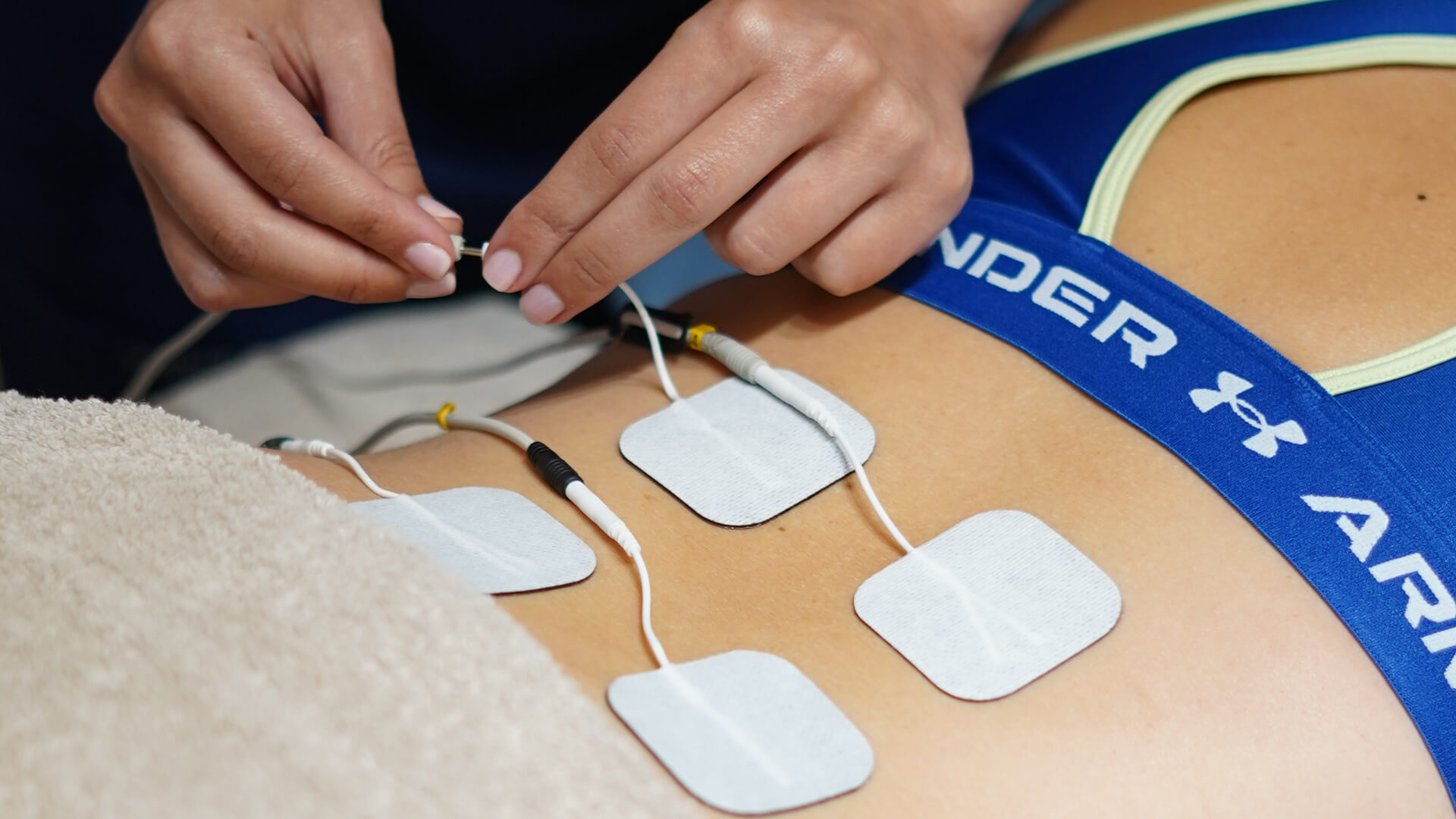
TENS transcutaneous electrical nerve stimulation treatment at KINETIKA

How TENS Modulates Pain

TENS works through two primary neurological mechanisms:

Gate Control (High-Frequency TENS)

At high frequencies (80–120 Hz), TENS activates large-diameter, fast-conducting sensory nerve fibres (Aβ fibres). These fibres synapse in the dorsal horn of the spinal cord and inhibit the transmission of pain signals carried by the smaller Aδ and C pain fibres — effectively “closing the gate” to pain at the spinal level. The pain relief is felt almost immediately and lasts for the duration of the stimulation.

Endorphin Release (Low-Frequency TENS)

At low frequencies (2–10 Hz), TENS activates the body’s endogenous opioid system, stimulating the release of beta-endorphins in the dorsal horn and higher brain centres. This produces pain relief that outlasts the treatment — often by several hours. Low-frequency TENS also activates serotonin and noradrenaline pathways, contributing to its efficacy in chronic pain.

Clinical Applications at KINETIKA

  • Acute pain management following musculoskeletal injury or surgery
  • Chronic low back and neck pain
  • Osteoarthritis pain management
  • Postoperative pain control
  • Neuropathic and nerve pain
  • Fibromyalgia and widespread pain syndromes
  • Phantom limb pain

What to Expect

TENS produces a tingling sensation — mild at low intensity, stronger as intensity is increased to comfortable therapeutic levels. Most patients find it pleasant or neutral in sensation. Sessions typically last 20–40 minutes. TENS is often used concurrently with other treatment techniques, providing pain relief that enables the patient to participate more comfortably in exercise and manual therapy.

Home TENS

TENS units are available for home use, and at KINETIKA we will guide you on appropriate settings, electrode placement, and frequency of use if home TENS is appropriate for your condition. Used consistently and correctly, home TENS can significantly reduce reliance on analgesic medication for chronic pain management.


Your Next Step

Ready to move better?

Book a consultation with one of our expert physiotherapists and start your recovery today.

Book a Consultation

Optokinetic Stimulation

Optokinetic stimulation is a treatment tool that uses moving visual patterns (like stripes or dots) to help desensitise the brain to motion and reduce symptoms of dizziness, disorientation, or visual overload. It’s particularly helpful when visual environments trigger or worsen your symptoms.

Read More »

Skull Vibration Test

The Skull Vibration Test uses a gentle vibration behind the ear to stimulate the balance organs of your inner ear and detect if there’s a difference between the left and right sides. It is often used as a simple but powerful screening tool when dizziness or imbalance seems one-sided.

Read More »

Videonystagmoscope (VNS)

VNS is a diagnostic tool that uses infrared video goggles to directly observe and analyse eye movements in real time. Since the eyes and inner ear are functionally linked, monitoring these movements helps determine whether a patient’s dizziness or imbalance is related to peripheral vestibular dysfunction or central causes.

Read More »

Video Head Impulse Test (VHIT)

The VHIT evaluates how well your vestibulo-ocular reflex (VOR) is working — the reflex that keeps your eyes steady when your head moves. It helps us determine whether your inner ear canals are functioning properly, especially when you feel dizzy or unfocused during quick movements.

Read More »

Physiotherapy for Every Body, Every Day

Physiotherapy is not just for when something goes wrong — it is for keeping things right. At KINETIKA in Dubai Hills, we combine precision assessment with evidence-based care to help you move better and live stronger.

Read More »

Why We Now Assess Every Patient in 3D

Something fundamental changed in how we practise physiotherapy at Kinetika when we introduced KinetiSense™ 3D motion capture. Here’s what we decided, why we decided it — and what it means for every patient who walks through our door.

Read More »