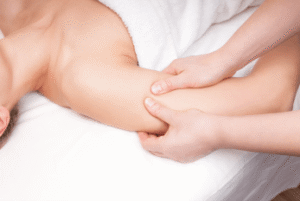
How to Massage Your Scar at Home

Healing doesn’t stop when the wound closes. It continues quietly under the skin for weeks and even months. Daily care at home plays a huge role in how your scar

— min read

By Youlie Warda | Physiotherapist at KINETIKA Physiotherapy Dubai

Healing doesn’t stop when the wound closes. It continues quietly under the skin for weeks and even months. Daily care at home plays a huge role in how your scar looks, feels, and moves later on. Just like brushing your teeth keeps your gums healthy, regular scar massage keeps tissues flexible and prevents them from sticking together.

Make Sure the Scar Is Ready

Before touching the scar, check that it’s completely healed:

  • The wound should be closed and dry, with no scabs or open spots.
  • There should be no redness, oozing, or pain that suggests infection.

If you’re unsure, ask your doctor or physiotherapist before starting any massage.

Start Gently Around the Scar First

To perform scar mobilization at home, wash your hands first and apply gentle pressure to the scar with your fingertips. You can use natural oil or unscented cream to reduce friction.

In the first days, don’t go directly over the scar line. Begin by placing two fingers beside the scar and move the skin in small circles.

Work around the whole scar for one to two minutes, two or three times a day.
If that feels comfortable, you can gradually move closer to the scar line itself.

Progress to Direct Scar Mobilization

Once your skin tolerates gentle touch, you can start working on the scar. Use various techniques like making small circles, moving up-and-down and side-to-side across the scar.

Each session should last about 5–10 minutes. Mild tenderness or pulling is fine; sharp pain means stop and lighten the pressure.

Gradually increase pressure by making small circles and pinching/rolling motions with mild pressure.

When to Seek Professional Help

If your scar feels tight, painful, hypersensitive, or limits movement, it may need extra care. Daily home care is important, but at KINETIKA, a trained physiotherapist can safely work through deeper layers and restore natural tissue mobility.
Your Next Step

Ready to move better?

Book a consultation with one of our expert physiotherapists and start your recovery today.

Book a Consultation

Optokinetic Stimulation

Optokinetic stimulation is a treatment tool that uses moving visual patterns (like stripes or dots) to help desensitise the brain to motion and reduce symptoms of dizziness, disorientation, or visual overload. It’s particularly helpful when visual environments trigger or worsen your symptoms.

Read More »

Skull Vibration Test

The Skull Vibration Test uses a gentle vibration behind the ear to stimulate the balance organs of your inner ear and detect if there’s a difference between the left and right sides. It is often used as a simple but powerful screening tool when dizziness or imbalance seems one-sided.

Read More »

Videonystagmoscope (VNS)

VNS is a diagnostic tool that uses infrared video goggles to directly observe and analyse eye movements in real time. Since the eyes and inner ear are functionally linked, monitoring these movements helps determine whether a patient’s dizziness or imbalance is related to peripheral vestibular dysfunction or central causes.

Read More »

Video Head Impulse Test (VHIT)

The VHIT evaluates how well your vestibulo-ocular reflex (VOR) is working — the reflex that keeps your eyes steady when your head moves. It helps us determine whether your inner ear canals are functioning properly, especially when you feel dizzy or unfocused during quick movements.

Read More »

Physiotherapy for Every Body, Every Day

Physiotherapy is not just for when something goes wrong — it is for keeping things right. At KINETIKA in Dubai Hills, we combine precision assessment with evidence-based care to help you move better and live stronger.

Read More »

Why We Now Assess Every Patient in 3D

Something fundamental changed in how we practise physiotherapy at Kinetika when we introduced KinetiSense™ 3D motion capture. Here’s what we decided, why we decided it — and what it means for every patient who walks through our door.

Read More »